

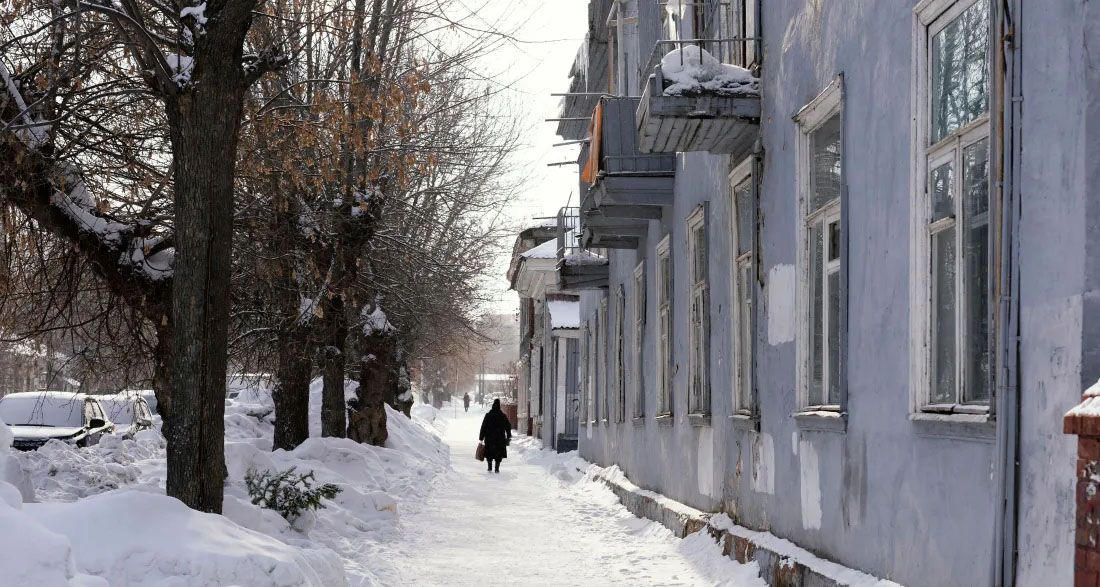
After Nathan died, the world felt colder. Not just outside in winter, but inside our small apartment above the grocery store where I lived with Micah and Nova. It was a modest place, nothing fancy, but it kept my children close to school and me close to work.
After losing Nathan, practicality had a new meaning—survival. Every decision, every step, had weight.
The email sat in my inbox for nearly an hour before I opened it. Not because I hadn’t noticed it—I had—but because I dreaded it.
“Regarding the incident outside the grocery store.”
The words pressed against my chest, heavy and mysterious. What incident? I had lived above that grocery store for six years. I knew its rhythms, its smells, its quiet little hums. Nothing ever happened there beyond the occasional shoplifter or spilled apples.
I read the email twice without clicking further, letting the words settle in. Micah’s sneakers were still by the door, scuffed and unlaced. Nova’s backpack leaned against the wall, one strap twisted the way it always was, like she had shrugged it off in a hurry.
A week earlier, I had made a small decision, a gesture I thought was minor—but somehow, it had stretched beyond me.
Life had moved differently after Nathan. I moved through my days with intention, not because I felt strong, but because two little eyes were always watching me, taking in every pause and every sigh. Micah, ten, noticed the things I didn’t say. Nova, eight, felt the shifts in a room before words were spoken.
“Peace looks different now, Mom,” I said once, in response to my mother’s insistence that I deserved calm. I wasn’t sure I believed it yet. Nathan’s jacket still hung on the coat rack. Heavy, dark gray wool, lined to keep out the cold.
Micah sometimes slipped into it when he thought I wasn’t looking. “Does it smell like Dad?” he asked one morning, careful, almost afraid of the answer.
“A little. Why, son?” I said.
“I just wanted to check,” he shrugged.
Nova pressed her cheek against the sleeve, breathing it in. I never told them to stop.
The day everything shifted began like any other. Micah was searching for his blue folder, Nova hovered near the door, half-zipped in her jacket, asking, “Grandma is picking me up today, right?”
“Of course,” I said, reassuring her. “She’ll be here in ten minutes. You know Gran.”
True to my words, my mother arrived on time, kissed my cheek, crouched to Nova’s level, and reminded Micah to eat properly. “You need meat and veggies, Micah. No more sugary cereal.”
“Yes, Gran,” he said, smiling sheepishly.
Once they left, I grabbed my reusable bag and headed downstairs for groceries. That’s when I saw him.
He sat against the brick wall near the entrance, careful not to block the door. His shoulders hunched, hands tucked beneath him. A cardboard sign leaned against his knees:
“Veteran. Anything helps. Please.”
Despite the cold, he wore only a thin sweater. No hat, no gloves, no jacket. I slowed, almost without thinking. His eyes lifted to mine, alert but tired.
“Ma’am,” he said quietly. “I’m sorry to bother you, but it’s colder than I expected. Do you have any change to spare?”
“I’m a veteran,” he added, pointing to the sign. “Just trying to get through the week.”
I told myself to keep walking. Dinner needed sorting. Homework awaited. Life didn’t stop for someone else’s struggle. But his hands—red, bare, trembling—caught me.
“You should have a coat,” I said before I could stop myself.
“I know,” he laughed softly, embarrassed.
“Wait here,” I said, turning back.
Upstairs, the apartment felt quiet in a way that pressed in, heavy and unfamiliar. Nathan’s jacket hung on the rack, sleeves curved as if remembering his arms. I imagined his voice behind me: “Don’t overthink it.” He always said that when I did.
I took the jacket down, thinking of Micah slipping into it when he missed his dad, and Nova pressing her cheek against it on sleepless nights.
“It smells like Dad,” she’d say, as if that explained everything.
I carried it back downstairs. The man’s eyes widened, disbelief flickering across his face.
“It’s clean,” I said. “And warm.”
“I can’t take that. It looks like it belongs to someone.”
“What’s your name?”
“Paul,” he replied.
“It used to belong to someone, but it isn’t helping anyone just hanging on a rack,” I said.
“I just don’t want to cause trouble,” he muttered.
“You won’t, Paul. I promise. I want you to have it.”
He slid into the sleeves. Not perfect, but enough.
“Thank you,” he whispered. “I won’t forget this.”
I bought him hot soup, bread, and a cup of tea. He nodded, words lost somewhere between gratitude and disbelief. I walked upstairs without looking back.
That night, Micah noticed the empty hook.
“Where’s Dad’s jacket?”
“I loaned it to someone who needed it, baby. Okay?”
He nodded slowly. “That sounds like something Dad would do.”
Nova hugged me tighter than usual before bed, as if she already understood more than words could say.
Finally, I opened the email in full. Formal, careful, stomach-tightening words:
“Dear Melissa C.,
We are contacting you regarding an incident reported outside the grocery store located beneath your residence. Building policy prohibits residents from engaging in unauthorized interactions that may impact tenant safety or building operations.
During a welfare check, the individual involved referenced receiving personal property from a resident. Please contact Facilities Management immediately to clarify your involvement.”
I read it three times. Nathan used to tease me for rereading like that. “You always expect the worst first, Mel,” he’d say, smiling.
“Clarification,” I muttered to the empty kitchen. “That never sounds good.”
I called my mother.
“Did you break a rule?” she asked, practical but alert.
“I don’t think so, Mom. I just gave someone a jacket.”
“And now you’re worried kindness comes with paperwork,” she said dryly.
“That’s one way to put it.”
When I called the number, a woman answered politely.
“We just need to document the interaction,” she explained. “No charges. No issues. He was cooperative.”
“Is he all right?” I asked.
“Yes,” she said. “He asked us to pass along his thanks.”
“For what?”
“For the jacket.”
There was a pause.
“He also mentioned your husband by name.”
My fingers tightened around the phone. “Nathan?”
“Yes. He recognized the jacket. They served together.”
I sat still, thinking of all Nathan had carried silently, and how one piece had come back to me.
The next afternoon, Paul appeared near the entrance, the jacket folded over his arm.
“I wanted to return this,” he said.
“You didn’t have to,” I replied, surprised by my own tightening chest.
“I know. I wanted to. I’m not out here anymore. The VA shelter took me in. They got me a coat, meals, a bed. They’re helping me figure out what comes next.”
“Your husband helped me once,” Paul added quietly. “His name is stitched on the inside arm. That’s how I knew. After I got out, I wasn’t doing well. He didn’t make a big deal of it. Just checked in, made sure I ate, made sure I showed up.”
“They wouldn’t have listened to me at the shelter,” he continued, “but when they saw the jacket, they treated me like I mattered. He would’ve liked what you did. He always believed people should look out for each other.”
I watched him walk away, shoulders lighter than when I had first seen him.
Upstairs, Micah saw the jacket in my arms.
“It’s back,” he said.
“Yes,” I said.
Nova hugged it tightly. That night, I hung it back on the rack and finally understood: kindness doesn’t need permission. It’s meant to be passed on.
And that day, I learned that even small gestures can ripple farther than we ever imagine.