

I never thought I could feel this torn between fear and love. But that was before I overheard Avery, my 16-year-old daughter, whispering to her stepdad, Ryan: “Mom doesn’t know the truth, and she can’t find out.”
The next day, they said they were going to buy a poster board. My curiosity turned into something stronger—I had to follow them. I thought it would be a trip to Target. But it wasn’t. It was the hospital. And what I discovered there forced a choice I had been terrified of facing.
Avery is sixteen. Almost old enough to drive. Old enough to slam her bedroom door a little harder than she used to. But still young enough that I thought I would always know when something was wrong.
Lately, she’d been quieter. Not just normal teenage quiet. Careful quiet.
She’d come home from school, go straight to her room, barely touch her dinner. When I asked, “Everything okay?” she’d nod quickly and whisper, “I’m fine, Mom.”
But she wasn’t fine. I could feel it in my gut. I even tried to ask her once, gently. But she brushed me off. I told myself it was just teenage stuff. She wasn’t ready to share yet.
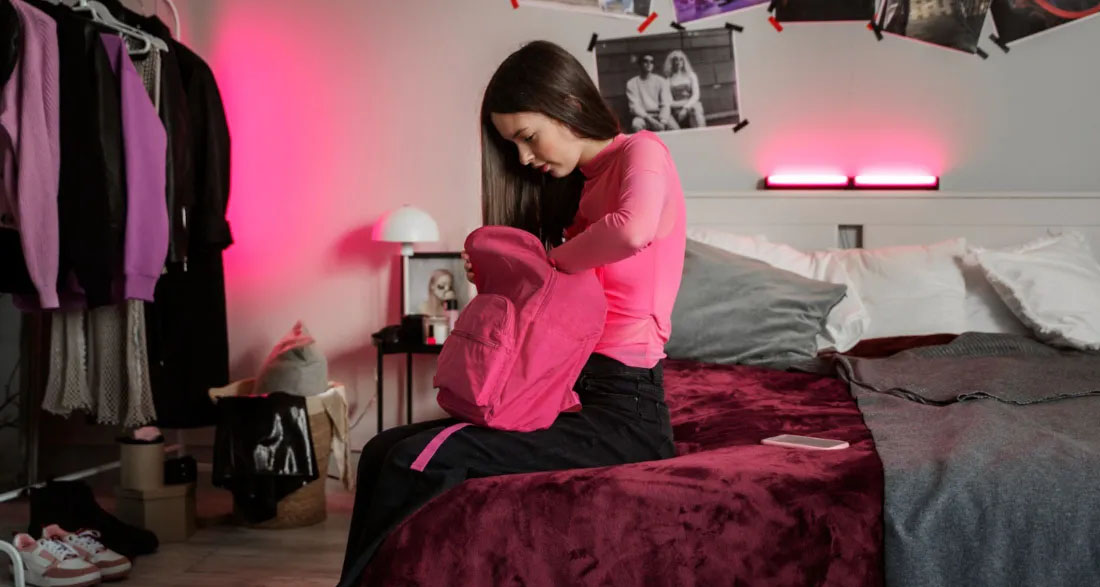
It was last Tuesday. I was in the shower, thinking about a new hair mask I’d bought. I left it in my purse downstairs.
Wrapping a towel around myself, dripping all over the hall, I went to grab it. And then I heard them.
Avery’s voice was low, shaky. “Mom doesn’t know the truth.”
My blood ran cold. I froze.
“And she can’t find out.”
I couldn’t process it. My heart pounded. I stepped on the floor and it creaked. Silence.
“Mom doesn’t know the truth,” she repeated.
“What’s going on?” I called out, my voice trembling.
Ryan’s voice switched suddenly, calm and casual, like a light had been turned on. “Oh… hey, honey! We were just talking about her school project.”
Avery jumped in too quickly, too bright. “Yeah, Mom. I need a poster board for science tomorrow.”
They smiled at me. Too quick. Too normal.
Something felt off. I nodded, forced a laugh, and walked away. But inside, I was shaking.
That night, sleep didn’t come. What truth? Why couldn’t I know it? Was it really about a poster board… or something else?
The next day, Ryan grabbed his keys.
“We’re gonna run out for that poster board,” he said casually. “Maybe pick up pizza too.”
Avery slipped on her sneakers without looking at me.
“Want me to come?” I asked.
“No, it’s okay,” Ryan said. “We’ll be quick.”
The second they left, my phone rang. It was Avery’s school.
“Hello, ma’am. I’m calling about Avery’s absences on Wednesday and Friday last week. We didn’t receive a note, and I wanted to make sure everything’s okay.”
I froze. Those days? She was supposed to be in school. I’d watched her leave with Ryan.
“Oh, um, yes. She had some appointments. I’ll send a note,” I stammered.
“Perfect. Thank you.”
I hung up and stared out the window. Ryan’s car was already gone.
My gut screamed: something was very wrong.
I grabbed my keys. My hands shook, but I followed.
Ryan didn’t drive toward Target. He turned away from the shopping center. My heart sank.
Ten minutes later, the car stopped. Not a store. Not a restaurant. A hospital.
I parked a few rows behind, watching. Avery and Ryan didn’t rush in. They stopped at the flower shop by the entrance. Avery came out holding a bouquet of white lilies and yellow roses.
Then they walked into the hospital. I waited a moment, then followed quietly.
The lobby smelled like antiseptic and coffee. I stayed far enough back.
They got on the elevator. Third floor. I took the stairs, my legs trembling.
At the hallway, I peeked around the corner. Room 312. Ryan knocked. A nurse opened the door and let them in.
The door closed. I froze. Who was in there?
Ten minutes later, they came out. Avery’s eyes were red and puffy. Ryan was comforting her. I ducked into a supply closet until they passed.
I walked to the door of room 312. Reached for the handle.
“Excuse me, ma’am,” a nurse said.
*”I… yes, I’m his…” I started.
“His what?”
“I… I don’t know who’s in there.”
“Then you can’t go in. Privacy regulations,” she said firmly.
“Please. My daughter was just in there. I need to know who—”
“I’m sorry. I can’t help you.”
She walked away. I stood there, frozen. I didn’t know what to do.
When I got home, Ryan and Avery were already there, casual as ever. Ryan set pizza boxes on the counter.
“Hey! Where’d you go?” he asked.
“Just the store,” I lied. I didn’t confront them about the call from Avery’s school. “Get anything good?”
“No. Just looked around,” he said.
Avery wouldn’t meet my eyes. My stomach twisted. Something was happening. Something big. And my family was hiding it.
The next day, Ryan said, “I’m taking Avery to the library. She needs to work on that science project.”
I nodded. But the second they left, I grabbed my keys again.
I wasn’t hiding this time. I followed them to the hospital. Watched Avery pick another bouquet. I went straight to room 312.
I waited five minutes. Then I took a deep breath and opened the door.
They froze.
“MOM..?” Avery whispered, her face white.
I didn’t look at her. My eyes were on the man in the bed.
It was David. My ex-husband. Thin. Pale. Hooked up to an IV.
For a second, no one spoke. Then Avery broke down. “Mom, I’m so sorry. I wanted to tell you, but…”
“What is he doing here?” I demanded.
Ryan stepped forward. “Sheila, let me explain.”
“Explain what? Why’ve you been bringing my daughter here behind my back?”
“Because he’s dying,” Ryan said.
The words hit me like a slap. David looked at me with tired eyes.
“Sheila,” he said softly, “I know you don’t want to see me. But I needed to see Avery. Just once more.”
“Once more?”
“He has stage four cancer,” Ryan said. “He reached out to me a few weeks ago. Showed up at my office. Said he didn’t have much time left. He wanted to spend his last days with Avery.”
“He’s dying,” I whispered.
I stared at Ryan. “And you didn’t think to tell me?”
“I was going to.”
“Going to?”
“Avery begged me not to. She was scared you’d say no.”
Avery stepped forward, tears streaming. “Mom, I’m not asking you to forgive him. I just want to be here. Please.”
I looked at my daughter, desperation in her eyes. “Please, Mom.”
I couldn’t breathe. I turned and walked out.
An hour later, they came home. Avery sat across from me. “I’m sorry, Mom. I know I should’ve told you.”
“Why didn’t you?”
“I was scared you’d be hurt. I didn’t want to hurt you.”
“So you lied instead.”
“I didn’t lie. I just… didn’t tell you.”
Ryan added, “Sheila, I’m sorry. I should’ve told you. But Avery was desperate. I didn’t know how to say no.”
“You’re her stepdad, not her accomplice,” I said.
“You’re right. I crossed a line. With Avery… and with you,” he admitted.
“You should’ve trusted me. Both of you,” I said.
“I know, Mom,” Avery whispered. “I’m sorry.”
That night, sleep wouldn’t come. I thought of David, of how little time he had left. I thought of Avery and how much she needed this.
I realized: it wasn’t about me. It was about her.
The next day, I told them, “I’m coming with you today.”
“To the hospital?” Avery asked.
“Yes,” I said. “I’m coming.”
I brought a pie dish—David’s favorite, blueberry. Not forgiveness. But a start.
In room 312, David’s eyes widened. “Sheila?”
I set the pie down. “This doesn’t erase anything.”
“I know,” he whispered.
“I’m not here for you. I’m here for Avery. So she doesn’t have to sneak around anymore.”
Avery and Ryan sat beside me. We held hands. We sat in silence. Honest silence.
Over the following weeks, we visited David together. I didn’t forgive him. I might never. But Avery laughed again, slept better, stopped sneaking around.
Last night, tucking her in, she hugged me tightly. “I’m glad you didn’t say no, Mom,” she whispered.
I kissed her forehead.
Love doesn’t always fix the past. Sometimes, it just gives us the strength to face whatever comes next.