


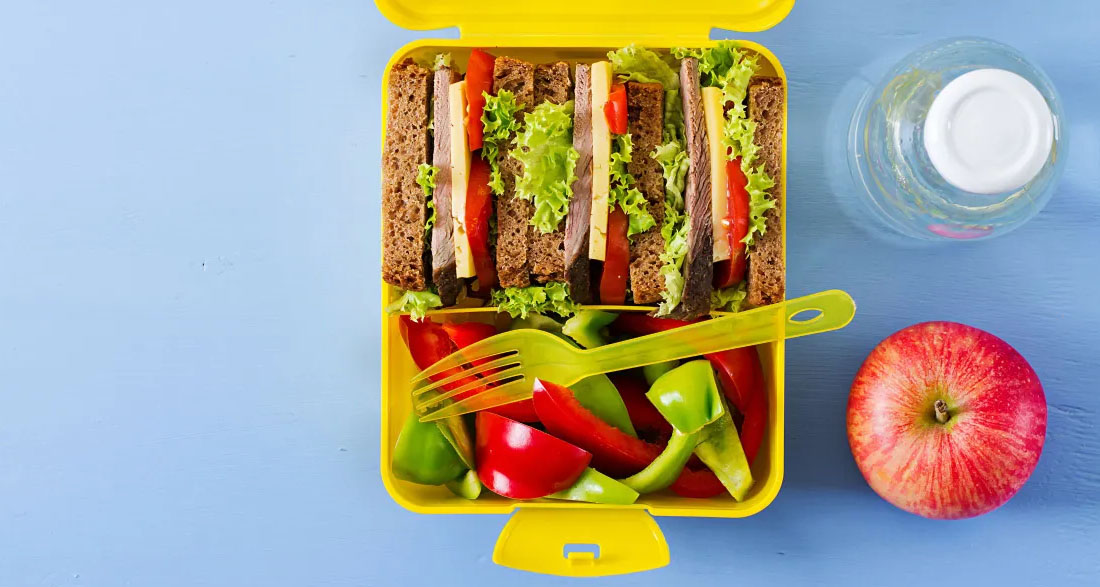
Every morning, I pack my son’s lunch, even when there isn’t much to pack.
Sometimes it’s just a peanut butter sandwich, a bruised apple, and maybe a granola bar from the clearance bin.
But it’s something. It’s nourishing. And in our little home, that something is sacred.
Usually, ten-year-old boys don’t talk about bills or skipped meals, but Andrew knows more than I’d like. He doesn’t ask for seconds. He doesn’t whine about repeats. And not once has he come home with anything left in his lunch box.
“Cleaned it out again, huh?” I joke most afternoons, shaking the empty container as he bends to take off his shoes.
“Yeah, Mom,” he says, setting them neatly by the door. Then he goes off to feed the cat or start his math homework like it’s just another day.
But lately, he’s been asking for more.
“Can I have two granola bars today, Mom?”
“Do we have any crackers left? The ones with black pepper?”
“Could you maybe make two sandwiches, just in case?”
At first, I thought maybe he was hungrier than usual — growing boys always seem to wake up hungrier overnight. But something about his face didn’t match the ask. He looked unsure, almost worried, like he was asking for more than just food.
That night, as I rinsed his lunch box and placed it carefully on the counter, I asked him a question I’d been holding back.
“Baby… is someone taking your lunch at school?”
He shook his head, not even looking up.
“No, Mom.”
“Then why are you asking for more, sweetheart? Are you… just tell me what’s going on?”
He paused, chewing at the inside of his cheek the way he does when he’s thinking too hard.
“I just get hungry sometimes, Mom. That’s all.”
It was an answer. Not a real answer, but it wasn’t a lie either — the kind of answer kids give when they’re trying to protect someone or not upset you.
So, I didn’t push. I figured the truth would come out in its own time.
“Okay, baby. We’ll make it work. Don’t you worry about that.”
I sat on the edge of my bed that night, staring at the grocery list scribbled on an envelope:
Bread, apples, granola bars, ham slices, peanut butter… maybe, if it’s still on sale.
We had two cans of soup left, half a loaf of almost-stale bread, no fruit, $23 in the checking account, and three shifts until payday. I pulled open my dresser drawer and looked at the gold locket I hadn’t worn since my mother passed. Could I pawn it? Would it cover enough to get us through the week?
The next morning, I skipped breakfast. I filled Andrew’s thermos with the last of the chicken noodle soup and slipped a chocolate bar — a leftover Halloween treat — into his coat pocket.
He grinned, hugged me tightly, and ran down the stairs. He didn’t know I hadn’t eaten or that I was figuring out how to make lunch again tomorrow. And he didn’t need to.
That’s when I heard the knock at the door. Not loud, but too early and unfamiliar.
Two police officers stood on the porch.
“Ma’am, are you Andrew’s mother?” one asked, voice steady but unreadable.
“Yes,” I said quickly, my throat tight. “Why? What happened? My son just left home less than ten minutes ago.”
His partner glanced at something in his hand before looking up.
“Ma’am, we need you to come with us.”
The drive was short, but I couldn’t stop shaking. They hadn’t cuffed me, hadn’t explained much. They just said it was about Andrew, and that he was safe.
Safe.
That word should have calmed me, but it didn’t. I replayed every worst-case scenario in my mind. Had something happened at school? Did he get in trouble? Did I miss something?
They pulled into the school parking lot, and my stomach dropped.
“This doesn’t make any sense,” I murmured. “Why didn’t someone call me first?”
“You’re not in trouble, Meredith,” one said. Using my first name made it feel more… human.
“Someone inside wants to talk to you.”
Inside, Andrew’s teacher, Mr. Gellar, stood by the entrance, beside a woman I vaguely remembered from the back-to-school meeting. She wore a name badge: Ms. Whitman, Guidance Counselor. She smiled in a way that was meant to be reassuring but didn’t quite land.
“Meredith, thank you for coming in,” she said. “Andrew is absolutely fine! He’s in class right now.”
My knees weakened. I had to grab the back of a chair.
“Then why am I here? You scared me!”
“I’m sorry. That wasn’t our intention at all. I promise.”
“Why don’t we talk in here?” Mr. Gellar suggested, leading me to an empty classroom. The door closed with a soft click.
Ms. Whitman folded her hands, took a deep breath. “This is about something kind your son has been doing. Something we felt you should know.”
“Kind?” I frowned. “Please, explain.”
“Do you know a student named Haley?” Mr. Gellar asked.
“No,” I said honestly. “Should I?”
“She’s in Andrew’s class. A sweet kid. Polite. Quiet. Mostly keeps to herself,” he explained.
Her father works all the time. He’s a single parent, and things have been… tight,” Ms. Whitman added.
My stomach sank.
“She hasn’t always had lunch. Not consistently,” Mr. Gellar continued.
“Okay…”
“We noticed that changed a few weeks ago,” Ms. Whitman said. “Haley started eating every day. She began participating in class. She’s been smiling more.”
“And what does that have to do with Andrew?” I asked.
“She told us Andrew was giving her his food,” Mr. Gellar said gently. “Andrew said he was always well-fed, and she… deserved it.”
“He started bringing extra,” Ms. Whitman said. “Giving her the snacks he thought she’d like best, even skipping his own so she wouldn’t be hungry.”
I sank into the chair. “I thought he was just… hungrier lately.”
“He didn’t want you to worry,” Ms. Whitman said. “But yesterday, he finally told us. He said you always taught him: you don’t need much to be kind. Just enough to share.”
My throat tightened. No one had ever seen the cost of this until now.
Then another man stepped in. Plain clothes, quiet presence, but unmistakable: a policeman.
“I’m Ben,” he said. “Haley’s dad.”
“Is she okay?” I asked, standing quickly.
“She’s doing much better, because of your son,” he said. “She’d been hiding her food habits from me. She thought if she didn’t eat at home… there’d be more for me.”
“You don’t have to thank me, Ben.”
“I do,” he said softly. “I didn’t realize how bad things had gotten. I work whatever shifts I can. I was failing my own child.”
I pressed a hand to my chest. A child that young, carrying that much fear — it broke something in me.
“She told me about Andrew,” Ben continued. “How he made sure she had something, how he always gave her the granola bar with the wrapper he said looked happier.”
I blinked, unable to hold back tears. “He learned that at home,” I whispered.
Ben nodded. “That’s why I came today. I thought you deserved to hear it. I didn’t have the patrol car; I asked friends to fetch you. I’m sorry for stressing you… I just didn’t know what else to do.”
We stood quietly, two strangers bound by children who had done what most adults wouldn’t — give without asking for anything in return.
“I used to look at people like you, with uniforms and badges… and think you had it all figured out,” I admitted.
“I used to think the same about people like me,” he said. “Turns out, we’re all just trying to hold on.”
That night, while Andrew worked on his science project at the kitchen table, I waited until he looked up.
“You could’ve told me, honey.”
“About Haley?”
I nodded.
“I didn’t want you to feel bad, Mom,” he said, glancing down at his pencil. “You already do so much.”
“What you did was extremely kind, baby,” I said, touching his cheek. “Quietly, bravely kind.”
“She was just so hungry. I didn’t think it was fair that I had food and she didn’t.”
“You are everything I ever hoped you’d be,” I whispered.
“You always say that when you’re about to cry,” he said, smiling.
“I’m not crying.”
“Really, Mom?”
He laughed and kept drawing.
Two days later, a package arrived at our door.
No return address. Just a plain box, sealed carefully. Inside, a card read:
“For the mom who packs two lunches and smiles… despite it all. Help is always available to anyone who needs it.”
Inside were grocery store gift cards, snacks, coffee beans, and a handwritten note from Ms. Whitman: we’d been added to a school assistance program. No forms, no waiting — just support.
Andrew wandered in after school, eyeing the open box.
“Is that for us?”
“Yes,” I said.
“Did someone send it because of Haley?”
“Because of you,” I said. “Because of who you are.”
He pulled out a granola bar, the same kind I bought on sale. “I’ll bring her one tomorrow,” he said casually.
I still pack Andrew’s lunch every morning. But now, I always pack one extra. Not because I have to, but because someone might need it.
And kindness, once it starts, has a way of coming back.
“I’ll bring her one tomorrow,” he said again, smiling.