


The Knock That Changed Everything
By the time I stepped into the grocery store that Thursday evening, I was so bone-tired that I felt one wrong beep from the register could make me cry right there in the bread aisle.
The fluorescent lights buzzed overhead, too bright, too yellow, too loud — like the whole world was humming just to make my exhaustion worse. My feet throbbed after a 12-hour shift, the kind of deep ache that didn’t leave even with a hot bath, a nap, or a prayer. Getting older was no joke.
I only needed the basics — bread, milk, cheese, maybe a frozen lasagna I could shove in the oven and call it dinner. That was the survival kit of a working mom who’d forgotten what an eight-hour sleep looked like.
My daughters, Ara and Celia, were at home sniffling with colds, arguing over the cat, and drowning in homework. After the divorce, our house was constantly on the edge of quiet chaos. And lately, I felt like I was holding everything together with tape and hope.
I brushed a loose curl behind my ear and stepped inside.
That’s when I saw Rick — the store manager — standing near the registers.
“Hey, Rick,” I said, giving him a tired smile.
His whole face lit up. “Ariel, how’s it going? How are the girls?”
I laughed softly. “Still fighting over whose turn it is to feed the cat. Celia’s growing fungi in her closet for a science project, and Ara’s upset her team didn’t make the finals. So… we’re hanging in there.”
He grinned. “Glenda still talks about you, you know. Says you’ve got magic hands.”
I raised a brow. “She just liked the pudding I brought her.”
He waved playfully. “Well, magic hands, pudding hands — she adores you either way.”
After a quick salute, he went back to stocking something. I headed into the aisles, letting myself finally breathe.
That’s when I reached the express lane and saw him.
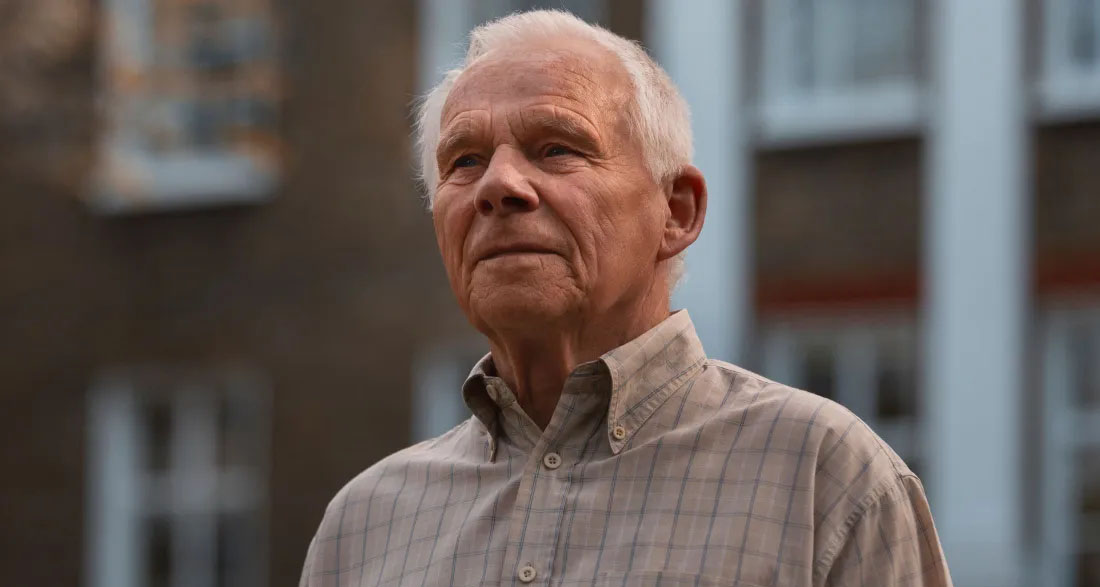
An older man stood ahead of me — thin, slightly hunched, wearing a faded jacket. He placed the simplest groceries on the belt: bread, peanut butter, milk. The kind of items people buy when every cent in their wallet has a purpose.
He slid his card.
Beep.
Declined.
He tried again, hands trembling.
Beep.
Declined.
The cashier froze, unsure if she should keep scanning or stop. A woman behind me clicked her tongue. Someone else sighed loudly.
From the back, a man muttered, just loud enough to be cruel:
“Some of us actually have places to be before we’re that age.”
The older man’s cheeks turned bright red. He lowered his eyes, ashamed.
“I… I can put things back,” he whispered.
Something inside me snapped. Not in anger — in recognition. I knew that feeling: making yourself small so strangers won’t look at you while your life feels like it’s unraveling.
Before he could touch the groceries, I stepped forward.
“It’s alright,” I said gently. “I’ve got it. You’re not holding anyone up. It’s food. Food is important.”
He blinked at me, shocked. “Miss… are you sure? I didn’t mean to hold up the line.”
“I know. But I want to.”
I reached for a chocolate bar and added it in. “My daughters and I have a rule. We always add something sweet.”
His eyes shone. “You saved me… You really did.”
The groceries were under $10. I paid. He thanked me five times — each time quieter, softer — as if emotions were dissolving his voice.
We walked outside together. Then he shuffled down the sidewalk alone until the shadows swallowed him.
I honestly thought I’d never see him again.
Life went back to its usual mess: dinner to cook, bills to organize, daughters to comfort, a house half-lived in with memories I tried avoiding.
Two mornings later, while pouring coffee, someone knocked. A sharp, urgent knock that nearly made me spill my mug.
I opened the door.
A woman stood there — charcoal-gray suit, tight bun, serious face.
“Ma’am,” she asked carefully, “are you the woman who helped an elderly man on Thursday?”
I froze. “At the grocery store?”
“Yes. My name’s Martha. The old man’s name is Dalton — he’s my grandfather. He asked me to find you. We need to talk. It’s important. It’s about… his final request.”
My heartbeat thudded in my ears.
“How did you find me?” I asked, gripping the doorframe.
She sighed. “I went back to the store. The manager let me see the footage. He said your name was Ariel — said you helped his wife after surgery. He also mentioned he sent groceries to your home months ago when your daughters were sick. He still had your address.”
I swallowed hard.
“He wants to see you,” she said softly. “He was very clear.”
“Now?”
“If you’re willing.”
I glanced at my slippers. “Just give me a second.”
Inside, Ara was at the table with cereal. Celia flipped through channels without watching.
“I need to step out for a bit,” I said. “Lock the door behind me.”
“Is everything okay?” Ara asked.
“I think it will be.”
The drive to Dalton’s house was quiet. The kind of quiet that holds questions nobody wants to ask.
The house was old, tucked behind trees, smelling of cedar and worn leather. Martha led me down a hallway.
Dalton lay under a pale blanket. When he saw me, his face brightened.
“You came,” he whispered.
“Of course I did.”
He studied me like he was memorizing my face.
“You didn’t stop to think,” he said. “You just helped. You didn’t make it a big thing. You just… saw me.”
“You looked like you needed someone to.”
He smiled weakly. “I’ve spent the last few years pretending to have nothing… not to trick people, but to understand them. To see who’s still good when no one’s watching. What you did… and that chocolate bar… that meant everything.”
He nodded at Martha, who pulled an envelope from her bag.
“This is for you,” he said, handing it over with trembling fingers. “No rules. No strings. Just what I can give.”
I held his hand. Despite being a nurse, I couldn’t declare time of death outside a hospital. So I waited with him. I stayed until his breathing slowed… then stopped.
The paramedics came quietly, respectful. They spoke softly, wrote down numbers, folded blankets. When they said the time of death, it sounded wrong — too cold for someone who had warmed my heart just days before.
I squeezed his hand one last time. “Thank you, Dalton.”
Martha walked me out in silence. It felt right.
In her back seat, I opened the envelope.
A check.
My breath hitched.
$100,000.
My hands shook.
When I got home, Ara sat on the floor with our cat, Benjy, curled in her lap. Celia peeked over the kitchen counter.
“Hi,” she said.
I sat with them. “Come here, babies. I need to tell you both something.”
I told them everything — the grocery store, the embarrassment, the kindness, the visit, the final moments.
When I said the amount on the check, they both stared.
“That’s… kind of like magic, isn’t it?” Ara whispered.
I exhaled slowly. “It is.”
Then I said, with a calmness that felt brand new:
“I want us to do something to honor him tonight.”
And for the first time in weeks — maybe longer — I felt light.
Like someone had finally turned off the buzzing fluorescent lights in my mind.
Like kindness had come full circle.
Like grief and grace had walked into my house together… and left behind a new beginning.