


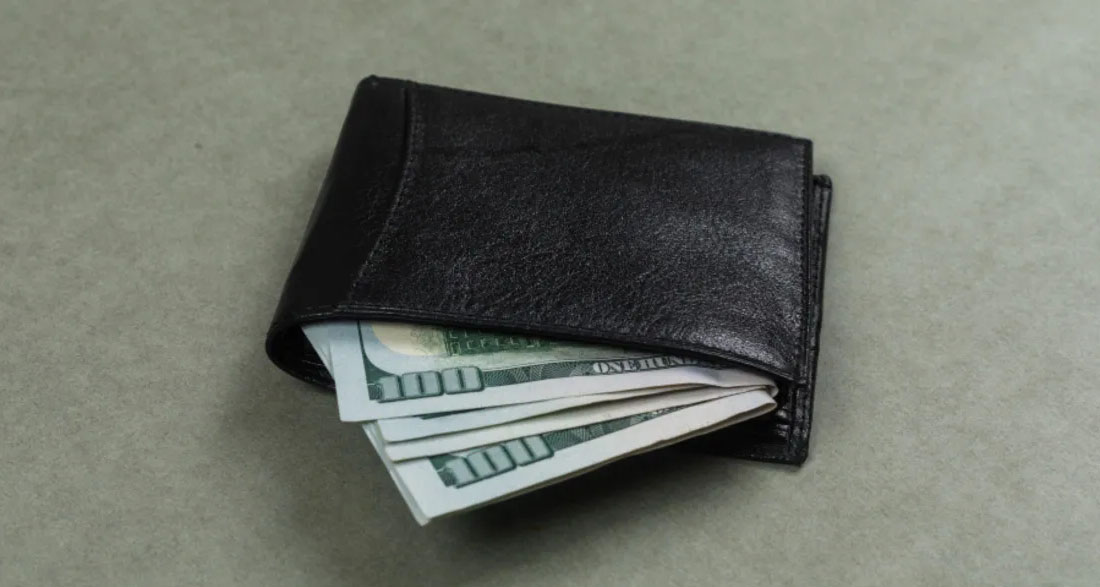
Cash had been disappearing from my wallet for weeks.
At first, I tried to ignore it. A five-dollar bill I was sure I had tucked neatly behind my credit cards — gone. Then forty dollars vanished. Then a hundred.
I told myself, Charlotte, you’re imagining things. You must have miscounted. But I have never been careless with money. Not once in my life. I balance receipts in my head. I know exactly what I carry.
Still, the cash kept disappearing.
And slowly, painfully, I became certain of something that broke my heart.
I thought my kids were stealing from me.
By the third week, I was checking my wallet before bed and again at dawn. I retraced every errand, every stop at the store, every coffee I bought, like I was trying to catch myself in a lie.
But the numbers never lied.
Then one Tuesday morning, I opened my wallet and felt my stomach drop.
Three hundred dollars. Gone. Overnight.
That evening at dinner, I watched my children the way a detective studies suspects. I hated myself for it, but I couldn’t stop.
My son kept his eyes on his plate. My daughter shrugged a little too quickly when I brought up money. My youngest stared at me like I had started speaking another language.
Three hundred dollars. Gone.
I set my fork down carefully. “Kids,” I said, keeping my voice steady, “if you ever need money, you ask Dad or me. You don’t take it. Stealing from family isn’t okay. Not in this house. Not ever.”
They all looked at each other, then back at me. Their faces were blank. Too blank.
“Mom, we didn’t take anything,” my daughter said, pushing her hair behind her ear.
“I haven’t touched your wallet,” my son added, finally lifting his eyes to mine, his voice tight. “Why would I?”
Even my youngest shook his head. “I don’t even go in your purse, Mom.”
But blank faces don’t always mean innocence. And I wasn’t ready to let this go.
That’s when my husband, Peter, set his fork down.
“They know you won’t really discipline them,” he said calmly, leaning back in his chair. “That’s the whole problem. They’re testing you because you let them.”
I looked at him across the table. He sounded so certain. So confident. Like he had already decided who the guilty party was and was just waiting for the rest of us to catch up.
And Lord help me, I believed him.
The next morning, I opened my wallet again.
Another three hundred dollars gone.
I sat on the edge of the bed, wallet open in my lap, staring at the empty space where the bills had been. My chest felt tight.
I was done second-guessing myself.
After work that day, I stopped at the hardware store. By nightfall, a small hidden camera was fixed to the hallway wall, perfectly angled toward the hook where I always left my purse.
My wallet sat inside, bills neatly stacked. Practically gift-wrapped for whoever thought they were being clever.
I hated that I was doing this. I hated that I suspected my own children.
But I had absolutely no choice.
That night, I lay in bed staring at the ceiling, waiting for morning like it was judgment day.
The next morning, I opened my laptop while the coffee brewed. My heart pounded as I pulled up the footage. I expected to see one of my kids creeping down the hallway in the dark.
Instead, I set my mug down so hard that coffee splashed across the counter.
It wasn’t the kids.
It was Peter.
My husband walked down the hallway at 2:07 a.m.
He paused. Checked each of the kids’ bedroom doors.
Then he went straight to my purse.
He opened my wallet calmly. No hesitation. No guilt. He pulled out a thick fold of bills and slipped them into his jacket pocket like he’d done it a hundred times before.
Then he grabbed his keys from the hook and walked out the front door.
Like he owned every second of it.
I rewound the footage. Watched it again. And again. As if repetition might turn him back into someone else.
My mind ran wild. Gambling debts. A secret phone. A motel room across town. Another woman.
My husband had been sneaking out of our home in the dead of night while I slept beside him.
I checked our bank accounts. Normal. Credit cards? Clean. No strange charges.
Whatever this was, he was keeping it strictly off the books.
And that kind of secrecy is never accidental.
That night, I didn’t sleep. I lay still with my eyes closed and waited.
At 2:03 a.m., I felt the mattress shift.
Peter moved quietly through the bedroom. I heard the soft jingle of his keys.
I counted to ten.
Then I grabbed my coat and followed him.
The cold hit me like a slap when I stepped outside. I kept my headlights off until he was far enough ahead. He drove across town, past the shopping district, past neighborhoods I knew.
Then he headed into an industrial area filled with chain-link fences and dark warehouses.
My hands tightened on the steering wheel.
This already looked worse than anything I’d imagined.
If this was what I feared, I didn’t know if our marriage would survive it.
He parked behind a low building with no sign. I stopped half a block back and turned off my engine.
I moved toward the fence slowly.
Peter opened his trunk and pulled out large bags — food, I realized — and stacks of neatly folded blankets.
At the side gate, a woman in a fleece vest was waiting.
Waiting for him.
I felt my stomach twist.
I stepped closer to the chain link fence and looked inside.
What I saw stole the air from my lungs.
It wasn’t a motel.
It wasn’t another woman.
It was a dog shelter. Small. Overcrowded. Barely held together by donations and determination.
Metal kennels lined the walls. Dogs pressed against the doors, tails thumping wildly.
Peter crouched beside a wire pen in the corner.
Inside it, four or five tiny puppies tumbled over each other, clumsy and round.
He fed them gently through the fence, one at a time. His voice was low and soft.
“Easy, little guy,” he murmured. “You’re okay. I’ve got you.”
The woman beside him said quietly, “We would’ve had to transfer this litter out next week if no one stepped up. We’re already stretched thin.”
And there was my husband — the man I had imagined in the worst possible light — kneeling on cold concrete, tucking a blanket around the smallest puppy like it was the most important thing in the world.
“Peter??” I called out.
He spun around, eyes wide. “Cha-Charlotte??”
“What is going on?” I demanded. “Why are you here?”
“I—I can explain,” he said quickly, stepping toward me.
I crossed my arms. “Start talking.”
He dragged a hand down his face. “Five weeks ago, I found them near a storm grate two blocks from my office. The mother was gone. They were freezing. I couldn’t just leave them.”
I blinked.
“I brought them here that night,” he continued. “But the shelter’s been over capacity for months. They didn’t even know if they could keep the litter. So I started coming back every few nights. Bringing food. Blankets. Cash for the woman who stays late to care for them. She won’t ask for it. But she needs it.”
This was not the confession I had prepared myself for.
“Why didn’t you just tell me?” I asked. “Why take money from my wallet?”
“I should have,” he admitted. “But sometimes I needed cash fast. It felt easier to grab it and go than to explain everything. I told myself I was fixing a small problem without creating a bigger one.”
“You let me doubt our children,” I snapped. “You sat at that table and pointed at them.”
He flinched.
“I know,” he said quietly. “That’s the part I can’t take back.”
The shelter worker stared at her clipboard, pretending not to hear.
“I’ll fix it,” Peter said. “I swear. I’ll fix it.”
I believed him.
But believing someone and trusting them again are two very different things.
On the drive home, I thought about something I hadn’t remembered in years.
When I was eight, I reached too fast for a neighbor’s puppy. The mother dog nipped my hand. It barely broke the skin, but I cried like it was something monstrous.
Over time, that tiny bite grew in my memory. The dog got bigger. The fear got sharper. It stayed with me longer than it ever deserved to.
Peter knew that. He knew how tense I became around dogs.
That’s why he hadn’t told me.
The next morning, before the kids were awake, Peter made coffee and set out four mugs.
When they shuffled into the kitchen, he cleared his throat.
“I owe you guys an apology,” he said, folding his hands. “All three of you.”
The room went still.
“I’ve been taking money from your mom’s wallet for the past several weeks,” he confessed. “She didn’t know. And when she brought it up at dinner, I let you sit there under suspicion instead of telling the truth. That was wrong. I’m sorry.”
My daughter stared at him. “You made Mom think we were thieves.”
“I didn’t think clearly,” Peter said. “I made a bad choice. And then I made it worse trying to hide it.”
“You were wrong, Dad,” my son said firmly.
“You’re right, buddy,” Peter replied. “And I’ll spend however long it takes earning that back.”
I stepped forward. “In this house, we make financial decisions together. No more secret spending. No more deciding alone what someone else can handle. That’s the rule now.”
No one argued.
Two days later, Peter and I drove back to the shelter together.
This time, we brought the puppies home.
They were in a cardboard box lined with one of Peter’s old flannel shirts. When we walked through the door, the tension that had filled our house for weeks finally cracked.
Our youngest dropped to the floor immediately, laughing as two puppies climbed into his lap.
My daughter pressed the smallest one to her cheek, smiling without saying a word.
My son watched his dad carefully — then crouched down and let a puppy chew gently on his finger.
Nobody said everything was fine.
But in that kitchen, with those ridiculous, wiggling little dogs, something that had quietly broken began to mend.
That night, Peter slid an envelope onto the counter.
Inside was every dollar he had taken. And a little extra.
“No more secrets,” he said, meeting my eyes. “And no more deciding alone what you can or can’t handle.”
I nodded slowly. “Good. Because next time, I’ll skip the camera and just follow you.”
He laughed.
And from that day on, there were no more secrets in our house.
We learned the hard way that even good intentions can break trust if they’re hidden in the dark.