


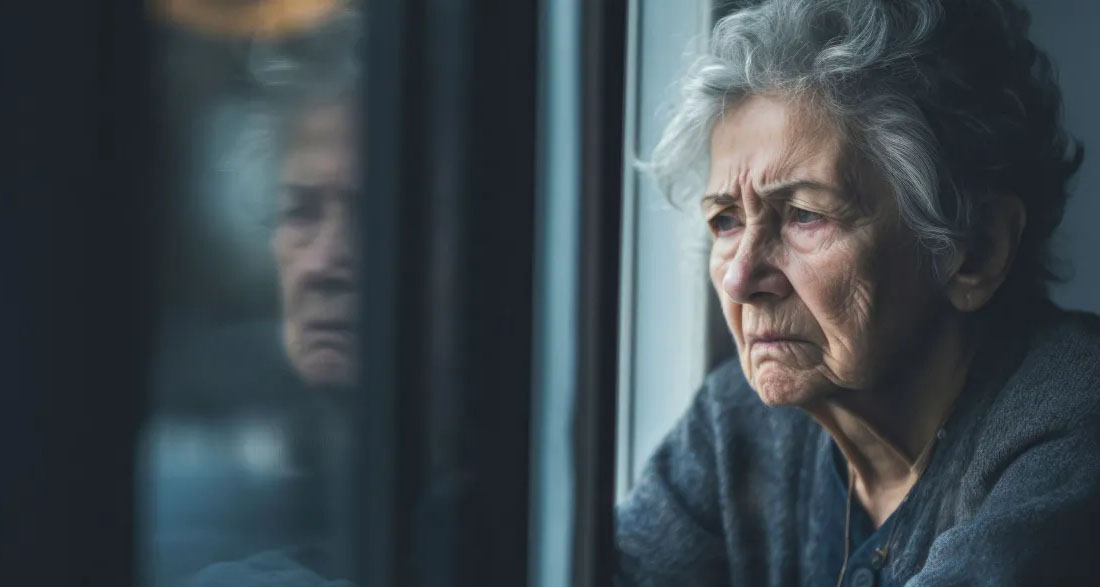
My grandparents gave up everything to raise me, but when it mattered most, I left them behind. I truly believed the past was buried for good. I thought it could never catch up with me. I was wrong. It crashed my wedding quietly, wearing tired shoes and carrying a cloth bag.
I didn’t grow up well. I grew up in the kind of home where birthday balloons stayed full only long enough to survive until the next morning. A place where food disappeared fast and laughter faded even faster. My parents drifted in and out of my life like storms that never stayed long enough to clean up the mess they left behind.
Here’s my story.
I didn’t grow up well.
Nothing in my life ever lingered. Not food. Not joy. Not people. My mom was in and out of jail before I even knew how to spell the word “sentence.” My dad would show up sometimes, but he was just as addicted, unstable, and broken as my mom. When he left, he took promises with him and never came back to keep them.
So when Nana and Papa—my mother’s parents—took me in, I was still a baby. They lived in a small town no one ever passed through on purpose. The kind of town where everyone knew your business and nothing ever changed. Their house was old and one story tall, with yellowing siding and floors that creaked louder than the winter wind.
The house always smelled like soup, Pine-Sol, and old laundry.
In my life, nothing ever lingered.
We didn’t have much. I wore hand-me-down clothes from neighbors whose kids had outgrown them. My sneakers were held together with more duct tape than rubber, and our Christmas tree came out of a cardboard box that was older than I was.
Birthdays meant a homemade cake with crooked icing and a card that sometimes had five dollars inside. Ten, if Nana and Papa had skipped lunch that week. But I never felt poor. I never felt like I was missing anything.
Because I had Nana and Papa.
Papa worked as a janitor at the local school long after his back gave out and his knees started locking. Nana cleaned houses every day. Her hands were always red and cracked from bleach, but every night she still ran those hands through my hair while I did my homework.
They never missed a school play. Even if I only had two lines. Even if I was just a tree standing at the back of the stage.
“Enough is a blessing,” Nana used to say while smoothing my shirt on picture day. “We’ve got enough, and we’ve got you. That’s more than most people ever get.”
They helped me with homework. They made warm meals. They held me when I cried at night. They called me their miracle. I didn’t understand why until I got older and realized how many doors they had closed in their own lives just to keep mine open.
School became my way out.
I studied like my life depended on it, because it did. Teachers noticed. They stayed after class with me. They quietly made sure I had notebooks, pens, and supplies other kids never had to think about.
I got straight A’s. I applied for every scholarship I could find. When the acceptance letter from my dream college arrived, Papa was already sitting by the window waiting for the mail like it was Christmas morning.
He had asked to leave work early that day.
Nana opened the envelope. Her hands shook. Her eyes filled with tears before she even finished reading. Papa puffed out his chest and tried to look tough.
“Looks like our girl’s smarter than the whole lot of us,” he said, but his voice cracked anyway.
We celebrated with the cheapest sparkling juice we could find at the grocery store.
“I can’t ask you to do this,” I told them later, when I realized how much more they would have to give up so I could go. “College is too expensive.”
“You’re going,” Nana said without missing a beat. “We didn’t spend eighteen years climbing a hill just so you could turn around at the top.”
So I went.
College felt like another planet. People drove cars that cost more than Nana and Papa’s house. They talked about internships in Rome and trust funds like it was normal. Meanwhile, I counted how many free meals I could get at the dining hall and prayed my shoes would last another semester.
That’s when the lies started.
Small lies at first.
“Oh, your parents?” someone would ask.
“Gone,” I’d say. It wasn’t a complete lie. They were gone in every way that mattered.
“And your family?”
“Relatives raised me. They passed.” Another lie.
Someone once said, “You must’ve inherited something, right?”
I shrugged and let the silence answer for me.
That was the moment I became someone else.
By sophomore year, I had a campus job and a credit card I couldn’t pay off. I bought cheap clothes that looked expensive. I stood taller. I changed the way I spoke. Another lie layered on top of the last.
I stopped going home.
Nana still called every week.
“Come visit, sweetheart. We miss you.”
“I’ve got midterms,” I’d say. “Maybe next month.”
“Okay, love,” she’d reply softly. “We’ll be here.”
And they were. Always.
That was the year I met Andrew.
He was everything my lies needed. Rich. Polished. Confident. The kind of man people assumed came from money and success. He called me “resilient.”
“You built yourself from nothing,” he told me once, smiling proudly.
I let him believe it.
I never used words like “jail” or “addiction” when I talked about my parents. He thought I had inherited something. He never asked to visit my hometown, and I never offered.
His parents adored me. They liked my manners, my quiet strength, the mystery I wrapped around myself.
When Andrew proposed after graduation—big ring, perfect speech—I said yes so fast it surprised even me.
“I want to give you the life you never had,” he said. “You deserve it.”
I told myself I’d tell him the truth someday. When it didn’t matter. When he couldn’t take the ring back.
His family paid for the wedding. An expensive venue. Beautiful flowers. A dress that made me feel like a doll behind glass.
“Use your money for our house,” Andrew said. “Keep your investments.”
I smiled and nodded. The lie had teeth now.
When I told Nana about the engagement, she asked, “Should I start looking for a dress?”
“We’re thinking of something really small,” I said quickly. “Maybe the courthouse.”
She paused. Just for a second.
“Well,” she said softly, “whatever makes you happy.”
She didn’t push. But she knew.
I never told them the date or the place. I kept everything light.
Then I posted a photo on Instagram. Just the ring. Just the venue lobby. I even shared the wedding date.
I didn’t know someone from my hometown followed me.
I didn’t know she went to church with Nana.
That’s how they found out.
They didn’t call ahead. They didn’t ask for an invitation. They didn’t even ask for directions.
They just came.
They thought they were surprising me.
They put on their best clothes. Nana wore her floral Sunday dress. Papa wore the same suit from my eighth-grade graduation. They polished his shoes by hand.
They brought a cloth bag—old, stitched, and restitched—the one Nana used for groceries.
They came because they thought I’d be happy to see them.
I didn’t notice them during the ceremony. Everything was golden and perfect. Andrew looked at me like I was his whole world. For a moment, I believed my lie had worked.
Then we reached the reception.
I was sipping champagne when I saw them by the doorway. Two small figures standing still, clutching the bag like a lifeline.
Nana saw me and smiled. Papa raised his hand halfway.
Then Andrew noticed them.
He stiffened and walked over before I could move.
“Excuse me,” he said loudly. “You need to leave. This is a private event.”
Nana smiled kindly. “Oh, hello. We’re—”
“We’re here for our granddaughter,” Papa tried.
“I don’t know you,” Andrew snapped. “And I won’t let homeless people ruin my wedding.”
My throat closed.
“But we’re the bride’s grandparents,” Nana whispered.
“I know everyone on the guest list,” Andrew said coldly. “And you’re not on it.”
Papa looked at me.
I did nothing.
Nana’s hope faded. She nodded once, touched Papa’s arm.
“We’re sorry,” she said softly. “We’ll go.”
They left without a scene.
Andrew came back and said, “Some people. Don’t worry, I handled it.”
I smiled. I danced. But something inside me broke.
A week later, a bag arrived at my office.
“Our last present. Your Nana passed away. —Grandpa.”
It was the same cloth bag.
Inside were envelopes. Dozens of them.
“For books.”
“For emergencies.”
“For when she feels alone.”
Each one held money. Money saved from skipped meals and long days.
Andrew found me crying on the floor.
“This is my grandparents’ life,” I told him.
The next morning, I drove home.
Papa opened the door.
I fell to my knees.
“I’m so sorry,” I cried.
He hugged me tight.
“I forgive you,” he said. “And she would have too.”
And through the pain and grief, I finally believed him.