


It was only a few days before Christmas when my life split cleanly into before and after.
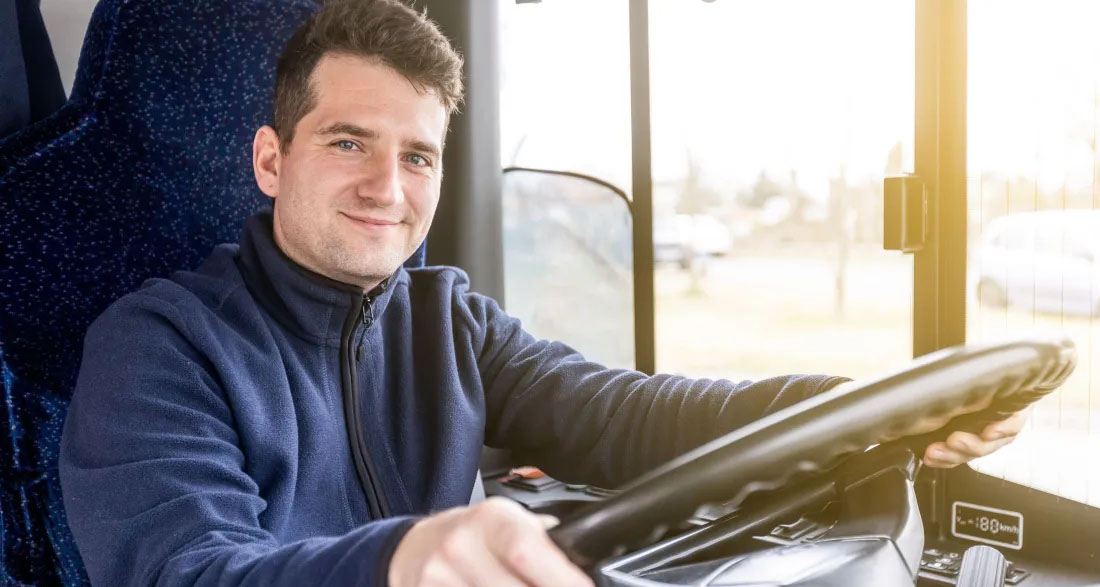
Back then, I was twenty-five years old and working as a school bus driver. It wasn’t glamorous. It didn’t come with big dreams or long-term plans. But it paid the bills, and at that stage of my life, that felt like enough. I showed up, drove my route, waved at the kids, and went home tired but content.
I never imagined that job would change my life forever.
It was late in the evening, just days before Christmas break. I had already dropped off the last child and was driving the empty bus back to the depot. The bus rattled softly, the heater groaning as it pushed out warm air. The road was quiet, almost empty, and the streetlights flickered in the cold darkness.
That’s when I saw him.
A small shape moved slowly along the side of the road, barely visible under a weak streetlight. I slowed down, squinting through the windshield.
It was a boy.
He couldn’t have been more than six years old.
He was far too small to be out there alone, especially in the cold, especially in the dark. What caught my attention most wasn’t just his size—it was the backpack hanging off his shoulders, clearly too big for him, and the way he clutched a stuffed bunny tight against his chest like it was the only thing holding him together.
This didn’t look like a kid who had wandered off by accident.
This little boy was running from something.
My heart started pounding. I slammed on the brakes, and the bus hissed as it came to a stop beside him. I opened the door carefully so I wouldn’t scare him.
“Hey, buddy,” I called gently. “Are you okay?”
He looked up at me. His face was pale, his eyes red but dry, like he’d already cried until there was nothing left inside him.
“My mom died today,” he said quietly.
“My mom died today.”
The words hit me like a punch to the chest.
Oh God. This poor kid.
“They wanted to take me somewhere,” he continued, his voice flat, almost numb. “But I didn’t want to go. So I ran away.”
Just like I thought—this child needed help. But I had to be careful. One wrong move, one wrong word, and he might bolt again.
“Do you want to sit on the bus for a bit?” I asked. “It’s warm inside. I can help you find somewhere safe.”
He stared at the bus, clearly unsure. Then he glanced over his shoulder, checking the darkness behind him, like he was afraid someone might appear at any moment.
After a long pause, he nodded.
I helped him onto the bus and sat him in one of the front seats. I turned the heater up until the windows began to fog.
“What’s your name?” I asked.
“Gabriel.”
“I’m Marcus,” I said. “And I promise—you’re safe right now, okay?”
He didn’t answer. He just hugged his bunny tighter.
I stepped outside and called dispatch on my work phone.
“I found a child walking alone on the roadside,” I said.
“Stay where you are,” they replied. “We’ll make some calls.”
When I climbed back onto the bus, what I saw nearly broke me.
Gabriel had curled into himself, his small body wrapped around that stuffed bunny. His eyes were open, but empty, like he wasn’t really there anymore.
He wasn’t sleeping.
He was shut down.
I took off my jacket and draped it over him like a blanket. He didn’t even move.
About fifteen minutes later, dispatch called back. They told me to take him to the emergency foster intake center across town. Social services had been contacted. Someone would be waiting for us.
I told Gabriel where we were going, but he didn’t react. Maybe he couldn’t hear me over the heater. Or maybe he’d retreated somewhere far away, someplace safer.
I drove slowly. By the time we arrived, Gabriel had finally fallen asleep. I lifted him carefully and carried him inside.
A woman rushed toward us the moment we entered.
“Gabriel!” she exclaimed. “I was so worried about you!”
And that’s when everything fell apart.
Gabriel’s eyes flew open. He screamed and thrashed in my arms like he was fighting for his life.
“I want to go home! I want my mom!”
The woman reached for him. “It’s okay, sweetheart. You’re safe now. We’re going to take care of you.”
But Gabriel clung to me harder, his small fingers digging into my shirt.
“Please,” he cried. “Don’t let them take me!”
He held onto me like I was the only thing keeping him from drowning.
My chest ached. This woman was trying to help, but all Gabriel could see was another stranger trying to take him away.
“Hey, bud,” I whispered, rocking him gently. “It’s okay. Just breathe, alright?”
I felt ridiculous—rocking a child who wasn’t a baby—but I didn’t care.
“I want to go home,” he sobbed again, quieter now. “I want to go home.”
The woman looked at me, her expression softening.
“Would you mind staying for a bit?” she asked. “Just until we can get him settled?”
Of course I said yes. How could I leave?
So I stayed.
I stayed while phone calls were made and papers were signed. I stayed while adults spoke in hushed voices that didn’t quite reach Gabriel, but were clearly about him. I stayed while he sat pressed against my side, shaking silently.
And as I listened, I learned the truth.
Gabriel’s mother had collapsed at work—an aneurysm. No warning. No goodbye.
There was no family. No one who could take him in.
The woman waiting for us had been sent to place him in emergency foster care. He’d panicked and run out the back door.
He had been walking for almost two hours before I found him.
Almost two hours.
When they finally set him up in a temporary room, it was time for me to leave. I knelt in front of him and looked him straight in the eyes.
“I’ll come visit you,” I promised. “You won’t be alone.”
He looked at me like he didn’t believe it.
But I meant it.
The next day, I went back.
The moment he saw me, he ran straight into my arms.
At first, I told myself I was just checking in.
But the truth was, Gabriel reminded me of my twin brother.
The same quiet way of watching people. The same habit of pretending everything was fine. The same way of making himself small so he wouldn’t be a burden.
I had lost my brother when we were kids. A summer trip. A river that looked calm—until it wasn’t. One second he was there. The next, gone.
The current took him before anyone could react.
I’d spent my entire life wishing I could go back and grab his hand sooner.
Losing Gabriel to the foster system felt unbearable.
So before Christmas, I filed the papers.
I told myself it was fate. That the universe was giving me a second chance. I swore I’d never let him slip away the way my brother had.
That was my first mistake.
The adoption went through quietly—and faster than I expected.
Gabriel moved in. At first, he barely spoke. He followed me everywhere, watching everything I did, like he was afraid I might disappear.
Slowly, things changed.
He started asking questions. Helping with dinner. Laughing.
The day he stopped clutching his backpack like he might need to run was a victory.
For years after that, I worked nonstop. Bus driver during the day. Taxi driver at night. Later, I rented out cars on the side, trying to build something solid.
I was always tired. Always counting hours. Always chasing bills.
But Gabriel never lacked love or safety.
I gave him everything I had.
And I never noticed how carefully he was keeping a secret from me.
Thirteen years passed.
One evening, I came home early and found Gabriel sitting on the couch.
Crying.
Beside him sat a woman in her forties, dressed professionally, a folder resting on her lap.
“What’s going on?” I demanded.
Gabriel looked up at me, his eyes swollen and red.
“Dad,” he said softly, “I have to go. We’ll never see each other again. I love you. Thank you for everything.”
The room spun.
I turned to the woman. “Who are you? And what did you tell my son?”
“I’d sit if I were you,” she said calmly. “You’ve been living a lie for thirteen years. And you’re not going to like what comes next.”
“A lie?” I repeated. “What are you talking about?”
“I’m Patricia,” she said. “Gabriel’s school counselor.”
She turned to him. “Tell him.”
Gabriel shook his head. “You said you would.”
“I will,” she said gently. “But it has to come from you too.”
“Dad,” Gabriel whispered, “I didn’t mean to lie…”
“For thirteen years,” Patricia said, “your son has been trying to protect you from the truth.”
She laid letters across the table. Teacher recommendations. Awards.
“Gabriel is top of his class. He’s been offered programs all over the country. He turned them all down.”
“Why?” I asked, my voice breaking.
Gabriel whispered, “Because I didn’t want to leave you alone.”
Patricia added softly, “He learned very young how much you feared loss.”
Then she said the words that changed everything.
“Last month, Gabriel was awarded a full scholarship to Stanford. Everything covered.”
Silence filled the room.
Gabriel braced himself. “I don’t have to go—”
I crossed the room and pulled him into my arms.
“You’re going,” I said. “Don’t worry about me.”
He broke down, shaking as years of fear poured out.
“I’ll miss you,” I whispered.
“I’ll miss you too.”
I looked at him—no longer the frightened boy on the roadside, but a bright young man.
“Just promise me one thing.”
“What?”
“Come home for the holidays.”
He smiled through tears. “Of course. This is still home.”
I held him tight.
For the first time, I wasn’t losing someone.
I was letting them go.
And maybe that’s what love really is.