


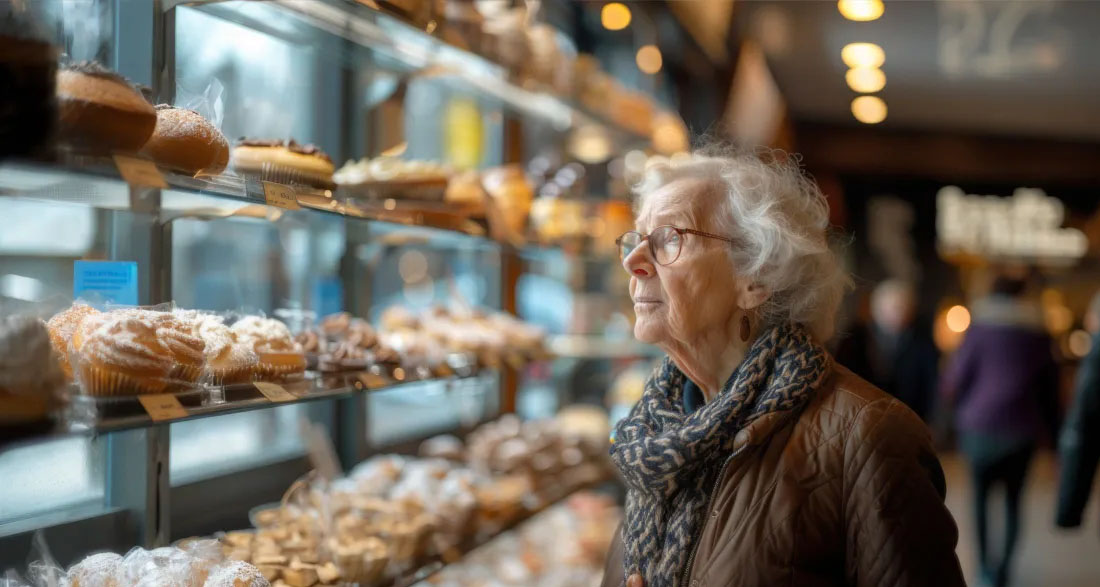
December had turned our neighborhood supermarket into a storm of chaos. The parking lot was a maze of cars circling like predators, everyone hunting for a single open spot.
Inside, the aisles were jammed with shoppers grabbing last-minute ingredients for holiday dinners that were already stressing them out. And the air… the air was thick with the tinny sound of Christmas carols and the faint but persistent scent of baking cookies from the nearby bakery section.
I wasn’t prepared for what would happen that week… and certainly not for the tears that would hit me the moment I opened the mailbox two days later.
Let me back up.
We’re a small family. Just three of us crammed into a modest house that smells faintly of coffee and old books. My husband, Tom, spends his days at the auto shop, coming home with grease under his fingernails and stories about broken transmissions.
I work part-time at the library and somehow manage to keep everything running at home between shifts, juggling overdue notices and holiday preparations.
And then there’s Tessa. My fourteen-year-old daughter, who moves through life with a quiet kind of awareness. Her messy ponytail swings as she walks, her oversized gray hoodie fraying at the cuffs. She isn’t flashy or loud.
She doesn’t demand attention. She just notices. She notices the neighbor’s drooping garden, the substitute teacher who looks like they didn’t sleep in days, or the stray cat that curls up on our porch every evening.
On weekends, she babysits and walks dogs, saving every dollar in an old cookie tin on her dresser. Most of that money goes toward small gifts: handmade cards, tiny thrift-store treasures, tokens that whisper, “I thought of you.”
She’s not the type to make a grand gesture. But that week, she would remind me that kindness doesn’t need grandeur to matter.
It was during one of our holiday grocery runs. The store was predictably packed, and the checkout line stretched ahead like a snake of stressed-out shoppers with overflowing carts. Tessa hummed along to “Silver Bells” playing overhead, rocking on her heels as she often does when she’s bored.
That’s when I noticed her. An elderly woman, hunched slightly, wearing a faded blue winter coat that looked thinner than tissue paper. Her hands shook as she clutched a crumpled grocery list, and she muttered under her breath, “I’m sorry… I’m sorry…” over and over, as if just existing in the store was a crime.
Nobody was rushing her. Nobody seemed angry. Yet she apologized anyway, her voice fragile, apologetic.
And then it happened.
A jar slipped from her trembling hands and smashed against the tile floor with a loud crack. Everyone turned to stare. The woman froze, her eyes wide and terrified, expecting someone to yell at her, to humiliate her further.
Before I could even process it, Tessa was kneeling beside the shattered glass.
“It’s okay,” she said softly, carefully picking up the larger pieces. “We all drop things sometimes. Don’t worry about it.”
The woman’s eyes instantly filled with tears. Not just embarrassment—but relief. Relief that someone wasn’t angry at her for being human.
“I… I’m so sorry,” she whispered, voice breaking.
“Please don’t apologize,” Tessa replied, standing up with the glass cradled carefully in her hands. “Really. It’s no big deal.”
A store employee arrived with a broom, and we helped the woman move her cart forward. Her groceries were simple: cans of soup, a loaf of bread, some vegetables, and a small box of tea.
When the cashier scanned the last item, the elderly woman’s color drained. Her hands shook violently as she opened her worn wallet, counting bills and coins slowly, painfully. It was obvious: she didn’t have enough.
“I… I must’ve miscounted at home,” she said, voice barely audible. “Can you… can you remove the tea? And maybe the…”
Her hope seemed to vanish right before our eyes.
And then Tessa moved.
From her jacket pocket, she pulled a neatly folded $20 bill. Money she’d earned babysitting the Millers’ toddler last weekend, money she had planned to spend on small Christmas gifts. Without hesitation, she handed it to the cashier.
“It’s the holidays,” she said simply. “She shouldn’t have to choose between groceries.”
The elderly woman stared at her, mouth slightly open, eyes wide with shock and disbelief.
“But… why would you do that, sweetheart?” she asked.
Tessa shrugged, cheeks flushing pink. “It’s December. This should be the kindest time of year.”
The woman pressed her hand to her mouth, tears spilling down her weathered cheeks. “Thank you, dear. Thank you so much.”
We helped her load her groceries into her cart and walked her to her old sedan with a dent in the passenger door. She hugged Tessa tightly before climbing in, and we stood in the cold parking lot, watching her drive away.
That was a moment I would carry forever—a snapshot of my daughter’s heart, pure and unlearned, replaying in my mind whenever life felt too heavy.
We drove home, and the day went on as normal. We baked cookies, tangled in the chaos of holiday decorations, and untangled last year’s string lights that had been shoved into a box in January without care.
I thought that was the end of it. Until yesterday.
I opened our mailbox expecting bills and flyers. On top of everything else, there was a small cream-colored envelope. No return address. Just my name written in careful, trembling handwriting that tugged at something in my chest.
I opened it right there in the hallway. Inside was a folded letter and a $25 supermarket gift card. But it wasn’t the gift card that brought me to my knees—it was the words on the paper.
“Please thank your daughter for her kindness at the store. I haven’t felt that kind of warmth in a very long time,” it began.
The letter was from the woman Tessa had helped. And then it hit me, like a wave I couldn’t fight:
“The holidays have been hard since my husband passed away two years ago. I still reach for his coat when the weather turns cold, forgetting for a moment that he’s not here. Your daughter’s gentle heart reminded me that goodness still exists in this world.”
I read on, my eyes blurring.
“Please let her know she reminded me I’m not invisible. So many people look right through me these days, like I’m just an obstacle. But your daughter saw me. Really saw me.”
She wrote about her son, who had been sick with pneumonia, and how Tessa’s act had lifted some of the weight off her heart. At the bottom, in smaller, almost apologetic handwriting:
“I hope you don’t mind that I found your address through the store. The cashier told me your name from your loyalty card, and he kindly helped me mail this letter.”
Tucked inside was a tiny handmade angel. Its wings were silver fabric, stitched by careful, loving hands that were probably shaky with age.
I sat on the stairs holding it, tears pouring freely. It wasn’t about the $20. It was about human connection, about being seen, about the way a single small act can ripple out in ways you can’t imagine.
Eventually, I walked to the living room, where Tessa was sprawled on the floor, trying to make the lights on our tree blink in a pattern she’d seen online.
“Tess,” I said, swallowing hard. “Come here for a second.”
She looked up at my tear-streaked face. “Mom? What’s wrong?”
I handed her the envelope without a word.
She read it slowly, eyes shifting from puzzled to moved, holding the little silver angel. For a long moment, neither of us spoke. Then she carefully hung the angel on a central branch of the tree, adjusting it so it caught the lights just right.
“I think this is my favorite gift this year,” she whispered.
And she was right. The best gifts aren’t always wrapped in shiny paper with big bows. Sometimes, they come in a small cream-colored envelope, written by someone who just needed to be seen. They remind us that the tiniest acts of kindness—almost free—can mean everything.
That $20 bill wasn’t just money. It was a reminder that one person’s kindness can make another feel visible, valued, and remembered. And now that little angel hangs on our tree as proof: kindness doesn’t just help the person receiving it—it comes back in ways we never imagine.
We all have chances every day to make someone feel seen. To remind them that they matter.
Wilma, the woman who wrote the letter, is probably sitting in her home now, thinking of a 14-year-old girl who showed her something she hadn’t felt in years. And Tessa is here, hanging a tiny angel on our tree, learning that the best parts of being human have nothing to do with money, status, or things. They have everything to do with heart.
We all have opportunities every single day to make someone feel seen.