


The week I became a mother, I also became an orphan—and my husband decided our baby’s inheritance should buy him a brand-new car. When I chose my daughter over his greedy ultimatum, he vanished. He went off to live the high life while I struggled, but twenty-five years later, karma finally caught up with him.
I’ve always told people life has a wicked sense of humor, but what it did to me felt less like a joke and more like a cruel experiment.
My daughter was barely a month old when my mother passed away.
Mom had been my anchor through everything. She held my hand through every prenatal appointment, especially the ones my husband couldn’t be bothered to attend. She was my rock, my guide, the person who made life feel manageable. And now she was gone.
Mom left me two things in her will: a tiny one-bedroom apartment and $30,000 she had quietly saved over the years. There was a note with it, folded carefully, her familiar handwriting looping across the paper: “This is for my granddaughter’s future.”
I remember holding it, tears blurring my vision. It was meant to give my daughter a start in life, a chance to grow and thrive. I clutched it like a lifeline, grateful beyond words.
But Chris—my husband—saw that money differently. To him, it was nothing more than a quick fix for his insecurities.
Two weeks after the funeral, I was sitting in the living room, rocking my newborn, trying to hum a lullaby through the thick fog of grief. That’s when Chris walked in. And those words… they changed everything.
“Give me the thirty grand,” he said casually. “I need a new Toyota. The guys at work are laughing at my old Ford.”
I stared at him, trying to find a hint of a joke, a flicker of reason. There was none.
“Look,” he said, leaning in, voice dripping with arrogance, “you don’t want your man looking pathetic, do you?”
“These are our daughter’s savings,” I whispered, hugging her closer. “Mom meant it for her education—”
“Education?” His face turned red with impatience. “She’s a month old! I need that car now. Don’t be selfish. Just transfer the money.”
He actually thought that wanting to save for our daughter’s future made me selfish.
I shook my head, my voice stronger than I felt. “No.”
He froze, staring at me as if I’d slapped him. “Last chance,” he growled. “You give me that money, or I’m gone.”
I knew exactly what I had to do.
“I choose my daughter,” I said quietly but firmly.
Chris slammed the door so hard it shook the baby’s crib. She woke, crying, and I rushed to her. Outside, I could hear him screaming:
“No man will ever want you now, not with a kid! You should’ve picked me! Now suffer!”
And then he was gone. No calls. No visits. No child support. Nothing.
For the next two years, it was just me and my daughter. I juggled two jobs, trying to make ends meet, trying to be present despite exhaustion. Meanwhile, mutual friends fed me updates on Chris’s life:
“Oh, he’s in Miami with a girl half his age,” one would say at the grocery store.
“Did you hear? He bought a bright red sports car,” another would call to inform me.
“He’s traveling in Europe now! Says he’s never been happier!”
I cried into my pillow so many nights I lost count, convinced his final curse, “Now suffer,” had come true.
But then, slowly, things began to change.
I got a new job that paid well enough that I didn’t need two jobs. A year later, I started taking night classes. My daughter, my tiny miracle, was growing into the brightest, most joyful part of my life. She laughed, she learned, she needed me—and needing me meant I couldn’t fail.
We celebrated victories in tiny ways—a good grade, a promotion, making it through the month without an overdraft—with the cheapest cupcakes we could find. Life was hard, but it was ours. And twenty-five years passed.
I had lost track of Chris long ago, never imagining he would come back into my life, of all ways, in the most unimaginable circumstances.
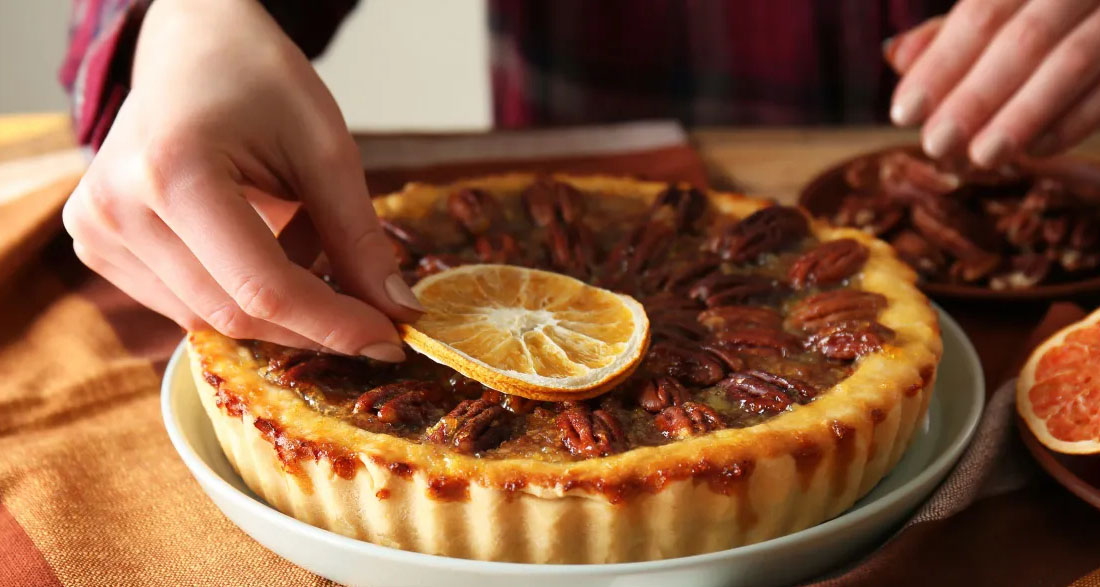
I was fifty now, financially stable, living in a cozy little house in a quiet neighborhood. My daughter had just graduated with honors. The day before Thanksgiving, I drove home with a warm pecan pie sitting on the passenger seat—a kind of pie I could never have afforded back when every penny counted.
As I walked up to the house, jingling my keys, I noticed a man hunched by the porch.
He was thin, shivering in a worn, dirty jacket. His shoes were torn, the soles peeling away. He looked defeated.
“Ma’am, please…” his voice rasped, weak from hunger but somehow familiar.
My heart stopped. I stepped closer. The man lifted his face. The scar above his left eyebrow, the angular jaw, those eyes… They were the same eyes that had watched me cry twenty-five years ago.
It was Chris.
“Wait…” he stammered, mouth falling open. “It’s you…”
I stared, my pulse pounding. “What are you doing here?”
He swallowed hard. “I have only one request.” He pointed to the pie. “Just… a slice of pie, please. I haven’t eaten since yesterday.”
“Wow,” I said quietly. “After all this time… here you are, asking me for help.”
Shame spread across his face like a heavy curtain. “I… I made mistakes. I lost my job, my home… everything. I’ve been sleeping wherever I can. I didn’t know this was your house. I swear I didn’t know it was you.”
Part of me wanted to unleash twenty-five years of pain on him. But then I looked up and realized my daughter was watching us through the window.
He whispered again, voice small and broken. “Please… just a slice of pie.”
And suddenly, I didn’t see the man who had abandoned us. I saw my daughter at five, sharing her only cookie with a classmate who had none. I heard my mother’s voice:
“Kindness is not for the deserving. It’s a reflection of you, not them.”
I exhaled slowly, letting go of the need for revenge. I stepped inside, put together a plate of food, and handed it to him without a word.
“I don’t deserve this,” he whispered, tears flooding his eyes.
“No,” I said gently. “You don’t. But I’m not doing this for you.” I glanced at the window—my daughter, oblivious to the truth, gave me a small nod.
“I’m doing it because my daughter deserves a mother who chooses compassion over revenge.”
He didn’t say anything. He just covered his face and cried—the deep, shuddering cry of a lifetime’s arrogance collapsing on itself.
I didn’t invite him in. I didn’t ask him to explain his life, his cars, or his girlfriends. I simply fed the man sitting on my steps.
When he finished, he wiped his mouth, gave a broken nod, and I said, “Good luck to you,” and went inside.
I thought that was the end, but I was wrong.
My daughter ran to me and hugged me tight. “Mom, that was so kind of you,” she whispered. “That poor man… I wish he had a family who could look after him.”
Should I tell her it was her father? I wondered. Should I tell her the truth about the man I had once loved and who had left us?
Chris had crashed back into our lives in the most unexpected way. He hadn’t asked about her, but that didn’t matter.
“Let’s sit down in the kitchen, sweetie,” I said. “We’ll have a slice of pie. There’s something I want to tell you.”
That night, safe and warm, we sat together before Thanksgiving, filled with gratitude. Life had come full circle. This time, I was the one who walked away.
And this time, I had chosen exactly what mattered most: love, kindness, and my daughter.