


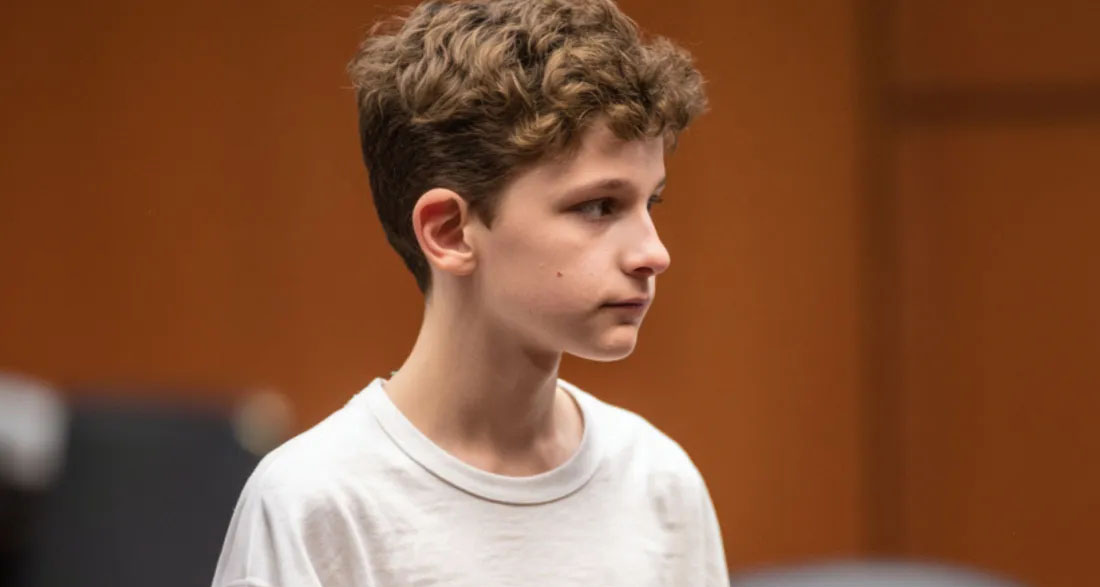
When I said yes to fostering a silent nine-year-old boy, it wasn’t because I believed I could fix him.
I said yes because my house had been too quiet for too long. And I knew that kind of silence. The heavy kind that follows you from room to room. The kind that hums in your ears at night.
But his silence was different.
Mine came from grief. His came from something broken, something I wasn’t supposed to ask about.
“I didn’t say yes because I thought I could fix him,” I told myself over and over again.
“He’s nine,” the social worker said gently, her voice careful. She paused before adding, “He doesn’t talk, Sylvie. Not at all. And to be truly honest with you… most families pass.”
I looked straight at her.
“I’m not most families, Estella.”
She studied me for a moment, like she was trying to decide if I understood what I was signing up for.
“I’m not most families,” I repeated quietly.
I didn’t need noise. I didn’t need a child who filled every second with chatter. I needed someone who understood silence. Someone who could live inside it with me. Someone who wanted to be loved without pressure, without conditions.
After three miscarriages and a husband who finally said he “couldn’t keep hoping for something that never came,” I had learned how to sit with emptiness.
When he left, he took the last of my expectations with him.
But he didn’t take my capacity to love.
That stayed.
And over time, that love began to ache for somewhere to go.
It didn’t happen all at once. I didn’t wake up one morning with clarity. It came slowly. I started volunteering at the library during story hour. I packed food hampers at the shelter. I told myself I was just keeping busy.
But one afternoon, I found myself holding a little boy’s jacket he’d forgotten in the reading corner. I stood there longer than I should have, pressing the small sleeve between my fingers.
And I didn’t want to let go.
That was the moment I knew.
A week later, I filed the paperwork.
The training classes took months. So did the background checks. Interviews. Home visits. Questions about my past, my marriage, my finances, my grief.
When the binder finally arrived in the mail — thick, official, full of forms and hope — I held it against my chest like it had a heartbeat.
“All you need to do now is wait,” I whispered to myself in the mirror. “Your little one will come, Sylvie.”
So when they called about the boy nobody wanted, I didn’t hesitate.
“Your little one will come,” I reminded myself.
Little Alan arrived with one small backpack and eyes that made people uncomfortable. Eyes that were too old for his face. Too watchful.
He didn’t cry.
He didn’t flinch.
He stood in my doorway like he was studying the layout, memorizing exits.
“Hi, sweetheart,” I said softly, holding out my hand. “Hi, Alan. I’m Sylvie.”
He looked at my hand.
He didn’t take it.
Instead, he walked past me and sat on the very edge of the couch, back straight, ready to move if he needed to.
I made hot cocoa and set cookies on a plate.
“Chocolate with extra marshmallows,” I said lightly. “It’s my specialty.”
He nodded once. A tiny movement. But I caught it.
And that was the beginning.
That first night, I read aloud in the living room. He didn’t look at me. He didn’t react. But he didn’t leave either.
That was enough.
I didn’t push him to speak. I didn’t ask questions he didn’t want to answer. I didn’t demand eye contact.
I simply lived beside him.
I packed his school lunches with small handwritten notes tucked inside. I didn’t expect answers.
Sometimes they were silly.
“Watch out for squirrels. They’re plotting to steal my tomatoes again.”
Other times they were softer.
“I’m proud of you, sweetheart.”
“You’re doing great, Alan.”
“You’re the light I’ve always dreamed about.”
For weeks, the notes came back crumpled. Or not at all.
Then one afternoon, I walked into the kitchen and saw a folded piece of paper placed carefully on the counter.
I opened it slowly.
It was one of my notes. Smooth. Unwrinkled. Protected.
“You’re the light I’ve always dreamed about.”
“He saved it,” I whispered, tears filling my eyes.
From then on, I talked while I cooked. I told him stories while chopping vegetables.
“Did I ever tell you about the time I broke my ankle chasing a runaway kitten?” I’d say. “It darted straight into Mrs. Holloway’s yard and I tripped over a rake. Very dramatic.”
Or, “I once tried to bleach my hair at home. It turned bright orange. I looked like a traffic cone, Alan. I’m serious. I couldn’t show my face for a week.”
Sometimes, his shoulders would shake just slightly.
A quiet laugh.
He pointed at nothing, but I knew he was listening.
I showed him the robins nesting on the porch. I pointed out cloud shapes. I played the song that reminded me of my mother.
His silence never felt like rejection.
It felt like someone learning the language of safety.
Over time, small changes happened.
He started sitting closer during storytime.
He waited by the front door while I searched for my keys.
If I forgot my scarf, he would silently hand it to me.
One winter, I got sick. I woke up groggy and aching, throat burning, head pounding.
On my nightstand sat a glass of water.
Beside it was a folded note.
“For when you wake up.”
I stared at those four words for a long time.
That was the first moment I understood something important.
He was watching over me, too.
Years passed.
Alan turned twelve. Then thirteen.
The house grew warmer. Slightly louder.
He hummed while loading the dishwasher. He moved confidently through the kitchen. Once, when I sang terribly off-key to Aretha Franklin, he smiled.
That smile undid me.
In that moment, I knew something had shifted.
I wasn’t just loving him.
I was being loved back.
People still asked questions.
“He still doesn’t talk?”
“He’s too old now, isn’t he?”
“Is something wrong with the kid? Don’t you want to get him some help?”
I would smile calmly every time.
“He doesn’t need to talk until he’s ready,” I’d say. “He just needs to feel loved. And he just needs to stay.”
And every single day, he stayed.
At fourteen, he grew taller than me. I caught him rearranging things on high shelves so I wouldn’t struggle.
He never mentioned it.
He just quietly helped.
I knew then — in my bones — he was mine. Even if the paperwork hadn’t caught up yet.
So I filled out the adoption forms the week before his birthday.
When I told him, I kept it simple.
“If you want me to make it official, my sweetheart, I will,” I said gently. “You don’t have to say anything. Just nod, Alan. Okay?”
He looked at me for a long time.
Then he nodded once.
The morning of the hearing, he barely touched his breakfast. His hands kept folding his napkin into smaller and smaller squares.
“You’re not getting returned, baby,” I said softly. “I promise. That’s not what today is about.”
He didn’t look up.
“Alan, you’re mine,” I whispered. “You’re my baby. Nothing about today changes that. It just makes it legal.”
He met my eyes for a second.
There was fear there. Hesitation.
But he nodded again.
The courtroom felt too bright. Too exposed. Judge Brenner sat at the front, glasses slipping down his nose, papers stacked high.
Estella sat beside us, clipboard in hand, eyes kind as ever.
“Alan,” the judge said warmly, “you don’t have to speak today. You can nod or shake your head. Or write something down. Do you understand?”
Alan nodded.
“Do you want Sylvie to adopt you?” the judge asked gently. “Do you want this woman to be your mother, legally?”
The silence stretched.
One second.
Two.
Five.
My chest tightened.
Did he not want this?
Did he not want me?
His shoulders were rigid. His hands clenched together.
Then he shifted.
He cleared his throat.
The sound echoed in the quiet room.
My heart stopped.
Was he—
“Before I answer…” His voice was rough. Fragile. But real. “I want to say something.”
The entire courtroom leaned forward.
“When I was seven,” he began slowly, “my mom left me at a grocery store. She said she’d be back soon.”
His hands curled into fists.
“I waited. I waited until it got dark. I was hungry, so I ate a cracker I found under the candy rack. That’s when the owner called the police.”
He swallowed.
“I got moved around a lot after that. One family said I was creepy. Another said I was too old to be cute. The third didn’t even learn my name.”
My vision blurred with tears.
“When Sylvie took me in, I didn’t trust her. I thought she’d give me back too.”
His voice shook.
“But she didn’t.”
He looked at me fully for the first time that day.
“She made me cocoa. She read to me. She left me notes. She paid attention to the food I liked. She let me exist in my own bubble… waiting at the edge for the moment it popped.”
No one in that room moved.
“She never forced me to speak,” he continued. “She just stayed. She tried so hard to show me she cared. That she loved me.”
Judge Brenner glanced at me, his expression soft.
“I didn’t speak,” Alan said quietly, “because I thought if I messed up… if I said the wrong thing… she’d change her mind. And someone would take me away again.”
My tears fell freely now.
He lifted his head.
“But I want her to adopt me,” he said clearly. “Not because I need someone. But because she’s already been my mom all this time.”
Estella let out a shaky sob.
Judge Brenner smiled warmly. “Well then,” he said softly, “I believe we have our answer.”
Outside, the air felt different. Lighter.
I leaned against the car, trying to adjust my shoe strap, but my hands wouldn’t stop shaking.
Alan walked around the car, reached into his pocket, and pulled out a folded tissue.
He handed it to me without speaking.
“Thank you, sweetheart,” I whispered.
“You’re welcome, Mom.”
It was only the second time I had ever heard him speak.
But this time, his voice was steady.
Certain.
That night, I made his favorite dinner. He ate every bite and sat closer than usual.
At bedtime, I reached for the old book I had been reading to him for years — still unfinished.
Before I could open it, he touched my hand.
“Can I read it tonight?” he asked.
I handed it to him carefully, blinking back tears.
He opened the book with both hands, turning the page gently, like it was sacred.
And he began to read.
His voice filled the room.
Warm.
Brave.
Home.
I never needed to hear the words “I love you.”
I just needed to know I had built a home someone wanted to keep coming back to.
And now, I knew.
I didn’t need to hear “I love you.”
I heard it in every word he chose to speak.