


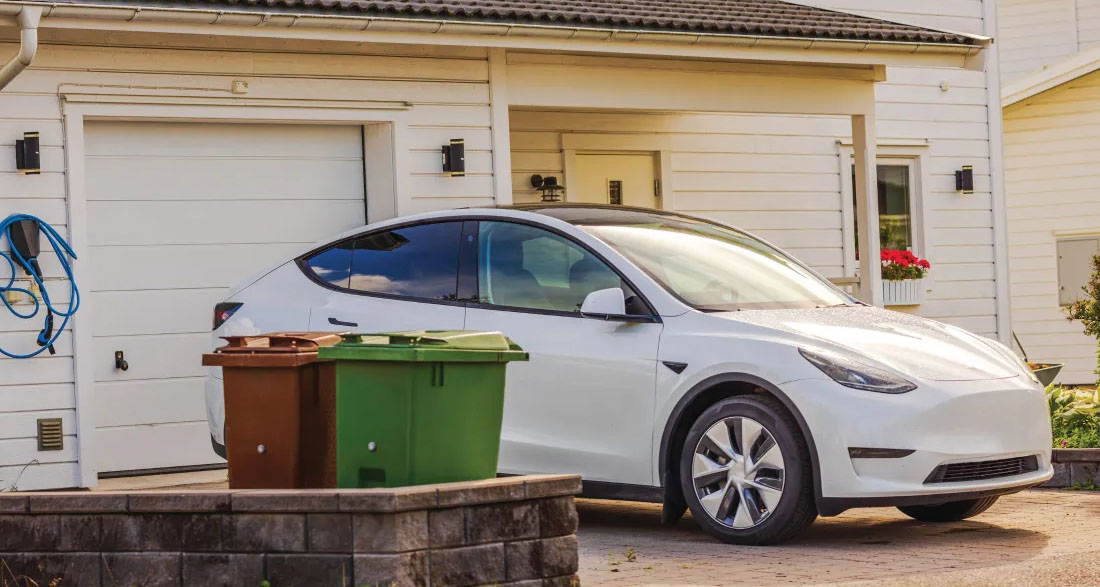
When my husband told me I had to pay $80 a day to use our car, I didn’t argue. I walked out instead. But the next day, when I came home, I was ready to explode. Only… I didn’t have to. Karma had beaten me to it, and it had a lesson for him that money couldn’t buy.
For years, everything I did revolved around schedules I didn’t control: bus times, rides from friends, favors that had to be returned. Grocery shopping was a juggling act—bags in one hand, stroller in the other. Picking up our daughter from daycare meant leaving work early, just in case a bus didn’t show.
Errands piled up, delayed, and stretched into chaos because the logistics were exhausting. I couldn’t even plan freely; I was always calculating: How would I get there?
Then came the day Daniel and I bought a car. Suddenly, everything changed.
When we brought it home, Daniel tossed me the keys.
“Go ahead,” he said. “Take it around the block.”
“For real?” I asked, eyes wide. “Right now?”
He laughed, casual, as if I’d just asked him a silly question. “It’s a car, not a spaceship.”
To him, maybe. But to me? It was pure freedom.
I could drop off our daughter without rushing. Stop by the store on the way home. Say yes to invitations without worrying about transportation. I could breathe again.
“It’s amazing,” I said one afternoon, loading groceries into the trunk. “I don’t know how I did all this before.”
Daniel smiled, but barely. His attention was already on his phone. “It’s just a car,” he said.
Just a car. But not to me. We had bought it together—or at least, that’s how I saw it. Daniel had made the down payment, I split the monthly payments. The registration was in his name, yes, but I hadn’t cared. We were married. We shared a life, a daughter, a home. Why wouldn’t we share a car?
A question I would soon regret not asking.
A few weeks later, my mom called from the hospital. Her voice was fragile, tired.
“The doctor says I can go home tomorrow,” she said.
“That’s wonderful,” I said, relief flooding me. “How are you feeling?”
“Sore. Slow. Ready to leave this place.”
“I’ll pick you up. Don’t worry about a thing.”
She hesitated. “Are you sure? I don’t want to be a burden.”
“You’re not. I’ll get Mila from daycare first, then come straight to the hospital. I’ll bring you home and help you settle in.”
“Thank you, sweetheart,” she said, her voice softening.
Everything was perfectly planned in my head the next afternoon: daycare pickup at five, hospital discharge paperwork right after, dinner at Mom’s. A plan that worked because we finally had a car.
I reached for the keys on the counter…
Then Daniel cleared his throat. I turned, and my stomach sank.
He was standing there, arms crossed, a frown etching his face.
“Is something wrong, hon?” I asked, trying to sound casual.
“Listen,” he said, firm. “You have to pay me to use my car. $80 a day should cover it.”
I laughed, thinking he was joking. “What are you talking about?”
But his jaw set, immovable. “The car is registered under my name. So it’s mine.”
I froze. Waiting. Expecting a punchline. A smile. Anything.
He didn’t.
“Daniel… I’m your wife. We’re a family. Are you seriously going to charge me to use our car?”
“Of course. You’re constantly using it—grocery runs, daycare, errands. Gas, wear and tear, maintenance… none of that is free. $80 a day is cheap. Try renting a car. It’ll cost you more.”
I couldn’t argue. I just… stared.
So I put the keys down. Ordered a taxi. Picked up our daughter. Took my mom home. And stayed the night at Mom’s because I needed distance from Daniel before I said something I’d regret.
The next day, I came home, furious, ready to let him have it. I had rehearsed my speech all night: how hurt I felt, how small he’d made me, how he’d turned our marriage into a business deal.
But karma had beaten me home.
The house was quiet. No TV, no kitchen clatter, no sounds of life at all.
Daniel sat at the dining table, shoulders slumped, phone face down like it had betrayed him. He looked up. “Oh. You’re back.”
I didn’t answer. I set my bag down slowly, noticing his tight jaw, bloodshot eyes. Something was wrong.
“What happened?” I asked.
He ran a hand through his hair. “I need to talk to you.”
Yesterday, that might have been funny. Today, it was serious.
“It’s about the car… I lent it to Mike last night.”
I blinked. “You what?”
“He needed it. His car’s in the shop, early shift… I figured… it’s my car.” He exhaled, the words heavy.
“And?” I asked.
“And he got into an accident,” he said quietly.
The room tilted. I gripped the chair for balance.
“What kind of accident?”
“Nothing major. No one hurt. But… the other car’s damaged. Police were called. Insurance involved.”
I crossed my arms.
“The insurance company called this morning,” he added. “Since it’s registered in my name and Mike isn’t listed, coverage might be limited… or denied. They need paperwork. Statements. A claim dispute. The other driver is already calling about repairs.”
I nodded slowly. “That sounds stressful.”
“It is,” he snapped, then softened. “I don’t know what to do.”
That was my moment. Surgical precision.
I pulled out a chair and sat down.
“Well… since it’s your car, this is your problem, right?”
He stared, shocked.
“That’s not fair,” he said.
“Why not?” I asked.
“You know how this works. You’ve handled insurance before. I don’t.”
“So now you want my help?”
“Yes,” he admitted, sheepish. “I need it.”
For the first time since yesterday, I felt solid ground beneath me.
“I can help. I know the process. I can make the calls, sort paperwork, deal with the adjuster. I can minimize the damage.”
He exhaled, relief washing over him. “Thank you.”
“But it’ll cost you,” I said, calm as a judge.
“What?”
“$80 a day,” I said, perfectly still.
He laughed once, sharp, disbelieving. “You’re joking.”
“You said access costs money. Time costs money. Wear and tear. Stress. Expertise. This will take time, calls, follow-ups—maybe days. And I’m very good at it.”
“You can’t be serious!”
“Daniel, yesterday I needed the car to pick up our daughter and my mother from the hospital. You looked me in the eye and said fairness meant charging me. Now, fairness still matters.”
“This is different,” he muttered.
“No, it’s exactly the same. You made that clear.”
Silence stretched. Watching him realize his mistake… it wasn’t satisfying. Just sad.
“You turned our marriage into a transaction,” I said softly. “I can’t live like that.”
He swallowed hard. “I was angry about money… feeling like I was paying more. I took it out on you. Made you feel small. That wasn’t fair. It wasn’t right.”
I didn’t interrupt. Let him sit in it.
“So here’s where we are. Either we’re partners, or we’re not. Either what’s mine is yours, and what’s yours is mine—including responsibility—or I’m leaving. I love you, but if you treat marriage like a ledger, it’s not worth it.”
He shook his head. “I don’t want to live like that either.”
“This ends here.”
He exhaled, shaky. “You’re right. I acted like the car mattered more than us.”
“This ends here,” I said again.
“I’m sorry,” he said, again. But this time, I could see it in his face.
“Apology accepted. We’ll handle insurance together. Like partners. Like we should have been all along.”
We spent three days making calls, filing claims, gathering statements. Frustrating, tedious, but we did it together. And I didn’t charge him a cent.
A week later, the claim was settled. Our rates went up—but not as much as they could have. Daniel kept apologizing. Not just for the car, but for everything it represented: keeping score, treating marriage like a business.
I forgave him. But I made it clear: no more games.
Now, when I grab the keys, he doesn’t say a word. He doesn’t try to charge me for gas, wear, or time. Because we’re not roommates splitting bills. We’re married. And that means something.