


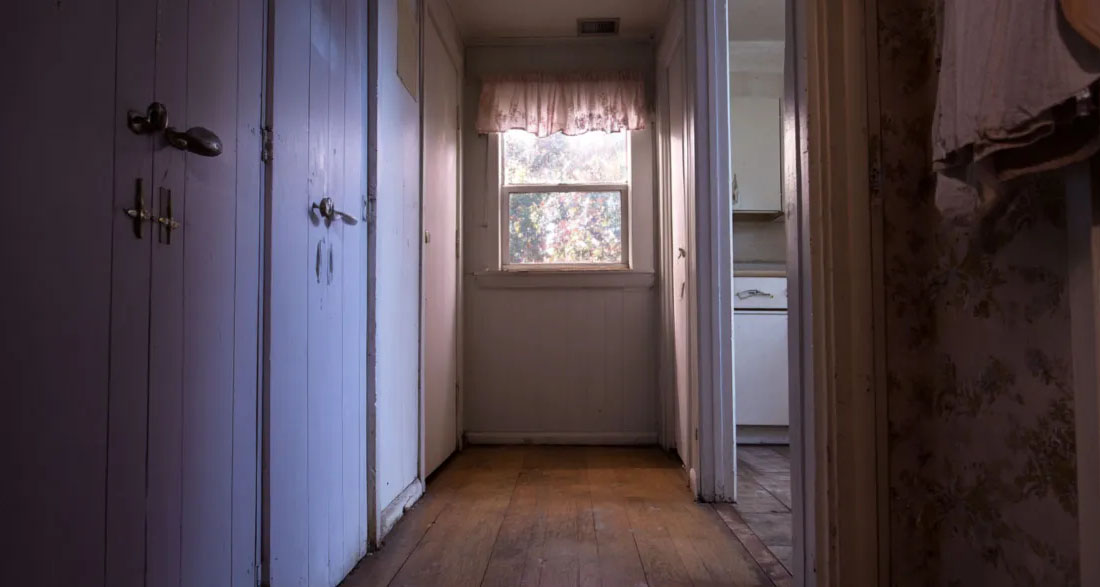
My husband and I built a quiet, steady marriage, one that many people envied—but there was one closet in our house I was never allowed to open. Ever.
After he died, curiosity gnawed at me until I could no longer resist. I hired a locksmith to break it open, expecting dusty paperwork, old bills, maybe a forgotten tax file. What I found instead shook me to my core—it was proof that the man I had loved for forty years had been hiding a life I never even guessed existed.
I married Thomas when I was 19.
We were kids, practically, with nothing but a tiny apartment, some wobbly secondhand chairs, and dreams that were way bigger than our bank account.
We built our life carefully, one brick at a time: buying a house, saving for retirement, attending to every boring, practical step to create a stable, safe life.
I prided myself on having an honest marriage.
I was a fool.
Thirty-nine years later, I stood in the rain and watched them lower Thomas into the dirt.
“A heart attack,” the doctors had said. “It was quick.”
“At least he didn’t suffer,” people whispered at the wake, trying to soften the blow.
I just nodded. They said it like it made a difference. But it didn’t.
Grief after forty years is quiet. It doesn’t scream. It just sits across from you at the table and reminds you, silently, that the seat where your love should be is empty forever.
Thomas wasn’t a man of secrets—or at least, that’s what I told myself for decades. He was open, kind, predictable. Reliable. Except for one thing:
At the end of our hallway sat a small, locked closet. Always locked.
Whenever I asked what was inside, he would say, “Just old paperwork, Margaret. Nothing interesting.”
I believed him. After years together, I had learned to trade small curiosities for peace. I trusted him. I thought I knew everything about the man who held the key.
But after Thomas was gone, that closet grew heavier with each passing day.
At first, I tried to ignore it. It felt disrespectful to pry. Whatever he had in there belonged to him. Maybe he had wanted it buried along with him. I told myself to let it stay hidden.
But I couldn’t.
On the tenth day after his death, I picked up the phone and called a locksmith.
When he arrived—a young man with a heavy tool belt and a bored expression—I stepped back and let him work. The metallic click of the lock opening echoed down the narrow hallway, making my heart skip a beat.
The door creaked, and a dusty, yellow-paper smell hit me. There were no skeletons, no shocking secrets on display. Just stacks of boxes and a heavy metal strongbox perched on a shelf.
“You want me to pop this one too?” the locksmith asked, nodding at the strongbox.
“Yes. Please,” I whispered.
I sat on the floor and pulled the first cardboard box toward me. Inside were bundles of letters tied with rough twine, decades old. I opened the first one and began to read.
In that instant, I realized something: I should have either forced him to tell me the truth while he was alive—or never opened that closet at all.
The first letter read:
Tom, the check came yesterday. Thank you. I didn’t know how I was going to cover the cleats and the league fee this month. He doesn’t know where the money comes from. I told him it’s from an old friend of his father. I hope that’s all right. He asks about you sometimes. — Marilyn
I felt a chill run through me. I opened the next one:
Tom, you don’t have to keep doing this. I know what it costs you to send it. But if you’re going to help, we need to talk about how long we’re going to keep the truth from him. He’s not a little boy anymore. He deserves to know who you are to him. — Marilyn
There it was. The truth staring me in the face. Thomas had been keeping a secret. Thirty-nine years of marriage, and suddenly I realized: he had a child I never knew about—or at least, a life he never told me he had been protecting.
“I was 19 when I married you,” I whispered to the empty hallway. “When did you even find the time?”
Then I found a letter with a return address that made me freeze. It was from a State Correctional Facility.
Tommy, you shouldn’t be writing to me. Mom and Dad changed your name and moved you away to protect you from what I did, don’t you get that?
I blinked. What was I reading?
I’m glad you reached out. It gives me a chance to apologize. I should have been a better role model for you, Tommy. If I could, I’d be a better big brother. — Steve
Big brother? Thomas had always told me he was an only child. How many layers of lies had been stored in that closet?
Mom and Dad changed your name and moved you away, the letters kept saying.
I pulled another letter:
Tommy, I heard from Marilyn. She’s pregnant. I don’t know what kind of father I can be from in here, but if that baby carries my last name, he deserves better than what I gave him. — Steve
I connected the dots. Thomas wasn’t hiding a son. He had been secretly helping a nephew. A nephew who needed him. A brother who had gone astray.
A loud bang snapped me out of my thoughts. The locksmith had finally opened the strongbox.
Inside were old newspaper clippings, a worn leather catcher’s mitt, and a few scuffed baseballs.
“Oh, wow! I know this guy!” the locksmith said. “My dad talked about him all the time. He had the best arm in the county. Then he got into a terrible accident, went to prison, and the family vanished overnight.”
I took the newspaper clipping. It was a photo of a young man in a crisp white uniform, eyes locked on a pitch, the stands full behind him. Another photo showed the same man smiling with a young boy on his arm, proud adults behind them. That little boy… was Thomas.
I reached into the box and pulled out a folded legal document: a name-change form. Everything clicked.
Thomas hadn’t been hiding a life of his own. He had been carrying a family secret—protecting a nephew, helping a young mother, shielding a child from scandal. All without telling me a word.
“It’s a shame,” the locksmith said quietly. “One bad night and a whole family disappears. Steve died alone in his cell years later.”
I sat on the floor, reading through every single letter, every newspaper clipping, every note in those boxes.
“Why did you think you had to carry this alone?” I whispered.
Because Steve had died alone in his cell years later. That was why.
Thomas had borne the weight of his brother’s mistakes. He had loved and protected his nephew in secret, quietly ensuring his family had a chance at life, even when it was painful for him.
I copied the return address from one of Marilyn’s letters. It took me two full days to work up the courage to drive there.
It was a small house, neat, with a basketball hoop over the garage and a lawn that needed mowing. A man in his 30s answered the door. He had Thomas’s eyes.
“Can I help you?” he asked.
“I… are you Marilyn’s son?”
He narrowed his eyes. “Who’s asking?”
“My name is Margaret. I was married to Thomas.”
He froze. “My… Uncle Tom?”
“You knew about him?” I asked.
He nodded slowly. “Mom told me when I turned 18. She said he didn’t want credit. He just wanted to make sure I could go to college, have a shot at life.”
I laughed softly, bittersweet. “That sounds exactly like him.”
I held out the box. “These belong to you. Your uncle kept them all these years because he loved your father, and he wanted to make sure he wasn’t forgotten.”
He traced the worn leather glove with his fingers. “Thank you.”
“Don’t thank me,” I said. “Thank your uncle. He’s the one who did all the heavy lifting.”
That night, back in my house, I stood in the hallway. The closet door was still open.
For 39 years, I had walked past that locked door, too afraid to ask the hard questions. Maybe I had called it trust. Maybe it was fear.
But silence and shame are not the same thing.
Thomas had lived by that truth. He had been an honorable man, protecting his family, even when he couldn’t say it out loud. I wished he had told me while he was alive. But I could honor him now.
I never locked that door again.
Silence and shame don’t have to live in the same house.