


My husband started taking our dog on three-hour walks every single night. At first, I thought it was just his way of relaxing. But one night, something made my stomach twist. I checked the GPS collar app on my phone—and my heart nearly stopped. The dot marking Daisy’s location was blinking across town.
I grabbed my keys and drove there, my mind racing. I stood outside the house and called James. His phone rang… inside. I pushed the door open, not knowing what I would find—and I wasn’t prepared for the truth.
James and I have been together for nine years. We have two kids: a seven-year-old daughter who thinks she’s already a teenager, and a five-year-old son who firmly believes he’s a dinosaur.
Our home is chaos incarnate—half-eaten snacks hidden under couch cushions, endless bedtime negotiations, and the kind of noise that never seems to stop.
So when James started begging for a dog, I said no.
Not because I don’t like dogs—I love them—but life was already overwhelming. Between the kids, work, laundry, meals, and bedtime chaos, adding a dog felt like signing up for extra stress.
“I’ll handle it,” James insisted. “Feeding, walks, training—everything. You won’t lift a finger.”
I’d heard that before—about the kids’ fish, the hamster, even the tiny lizard he tried to keep alive for a week.
But he didn’t give up. Soon, the kids were on board. My daughter drew posters and even wrote a school essay titled, “Why My Mom Should Let Us Get a Dog.”
Eventually, I gave in.
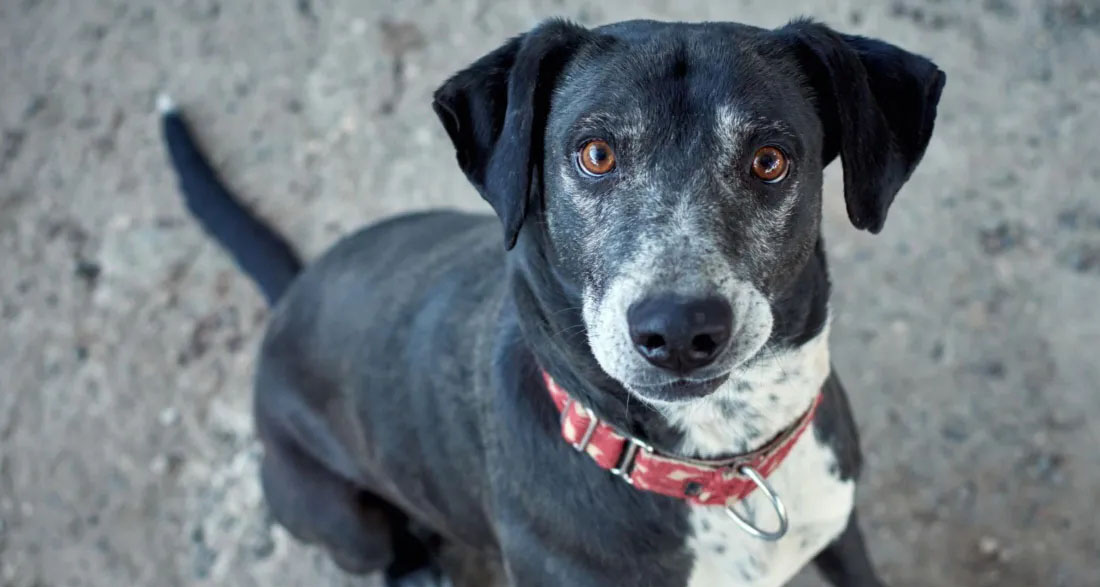
We went to the shelter and came home with Daisy, a rescue mutt with floppy ears and soulful eyes that could melt steel. The kids were instantly smitten. Even I found myself sneaking glances at her when I pretended to be annoyed.
And here’s the surprising part: James actually kept his promise.
Morning, afternoon, and long evening walks—he took over completely. It became his routine, his “therapy,” as he liked to say.
“See?” he’d grin, clipping on Daisy’s leash. “Told you I’d handle it.”
For a while, everything was normal. Then one night, it wasn’t.
We were outside, James walking Daisy around the block. I was inside, chopping vegetables, when I heard him yell:
“DAISY! DAISY, COME BACK!”
My heart lurched. I ran outside. Our daughter was crying; our son was frozen on the porch. Daisy had slipped her collar and run off.
We spent two frantic hours combing the neighborhood, flashlights in hand. James’s hands shook. The kids sobbed.
“We’ll find her,” I kept repeating. “She has to be close.”
Finally, James found her hiding under a porch three streets over. When I asked him how he knew, he said simply, “I just guessed. We walk this street sometimes.”
But there was something odd in the way he said it.
That night, after tucking the kids into bed, James sat on the edge of our bed, head in hands.
“I can’t go through that again,” he whispered.
“We won’t,” I assured him.
I couldn’t shake the fear, though. The next day, I ordered a GPS tracker collar for Daisy. I clipped it on her when it arrived, quietly.
James noticed. “What’s this? Fancy upgrade for Daisy?”
“Yep! The old one was getting worn out,” I said lightly. He didn’t suspect it would track him too.
Then the walks started to get weird.
At first, they were normal—thirty minutes, maybe an hour. But over the next few days, they stretched longer… and longer. Two, three hours at a time. Almost every night.
“When do you even come back?” I asked one night at 11:45 p.m.
“Daisy needs exercise,” he said. “She has a lot of energy. Helps me clear my head.”
Three hours to clear your head? In the dark? On random weeknights? It didn’t add up.
The kids stopped asking where Daddy was. They just shrugged. “He’s walking Daisy,” my daughter said casually, as if it were normal.
But it wasn’t normal.
One night, I woke at 1:00 a.m. The house was silent. James’s side of the bed was empty. Daisy was gone too.
I grabbed my phone. The GPS tracker blinked: miles away, across town. The street name froze me. It was the same street where we had found Daisy the night she ran away.
I drove through quiet streets, heart hammering, imagining the worst—an affair, a mistress, a second family.
I pulled up to a small cottage. The porch light was on. My stomach knotted. I called James. His voice came through, calm:
“Hey, babe. Everything okay?”
“Where are you?” I demanded.
“Just out with Daisy. Circling the block.”
But the GPS said otherwise. I could hear his phone ringing inside the house.
I pushed the front door open. James was frozen. Daisy sat beside him, tail wagging.
“NO—NORA??” he gasped.
“What are YOU doing here?” I said, voice shaking.
Before he could answer, I heard a cough from the back room. I stepped forward and froze.
An elderly woman sat in a rocking chair. A little boy, no older than three, played with blocks on the floor.
“Nora,” James whispered, “let me explain.”
“Who is she?” I asked.
“I’m Carla,” the woman said softly. “And you must be James’s wife.”
James ran a hand through his hair. “A few months ago, I almost died. I was crossing the street, not paying attention. Carla pulled me out of the way. If she hadn’t, I wouldn’t be standing here.”
I stared at the boy stacking blocks.
“His parents died two years ago,” Carla said. “It’s just me and him now.”
James stepped closer. “I wanted to help her. She saved my life. But I didn’t tell you because… you’d just had surgery. I didn’t want to scare you.”
He gestured to Daisy. “I adopted Daisy to have a reason to leave the house. A cover. So I could come here, help Carla, make sure she and Oliver were okay, and you wouldn’t worry.”
Tears filled my eyes. “I thought you were having an affair.”
“Nora, no. I would never…”
I pulled him into my arms, crying. Relief, guilt, love—all crashing over me.
The next week, I went with him. We brought groceries. I cooked dinner while James fixed a leaky faucet. The kids played with Oliver. Daisy ran around, happier than I had ever seen her.
“She knew,” James said, watching Daisy. “She knew this was important.”
I leaned against him. “So did you.”
Sometimes, the things we fear are just miracles hiding in plain sight.
Daisy was finally home—but this time, everyone knew the truth.