


I grew up invisible in my own home.
Not ignored in small ways. Not forgotten by accident.
Invisible.
I was the leftover piece in my father’s second marriage — the quiet girl who didn’t quite fit into the new picture-perfect family. So when my stepmother died years later, no one was more shocked than I was to learn what she had left me.
When the lawyer slid the envelope across the polished mahogany desk, my palms turned cold and sweaty. I had walked into that office expecting nothing more than a formal will reading, maybe some awkward eye contact, and then I’d leave. That was it.
What I did not expect… was to walk out as the sole heir of a three-million-dollar house that didn’t even feel like it belonged in my world.
But before I tell you how that inheritance shattered every fragile connection I thought I had buried years ago, I need to take you back — back to the moment when my life first broke in two.
I was ten years old when my mother died.
One day she was there in the kitchen, humming softly while stirring her famous chicken soup. I can still hear the spoon tapping against the pot. I can still smell the garlic and pepper floating through the house.
The next day, she was gone.
An illness swept through our lives like a thief in the night. Fast. Merciless. Unfair.
After her funeral, the silence inside our home felt like it had weight. My father and I moved around each other carefully, like survivors of a shipwreck clinging to the same piece of wood.
We ate dinner quietly.
We avoided looking at her empty chair.
Sometimes, I heard him crying at night.
Two years later, he remarried.
Her name was Helen.
To the outside world, she was elegance in human form. Perfect hair. Perfect posture. Perfect pressed suits. A faint trail of expensive perfume followed her like a signature.
But to me?
She was a wall.
I remember the first night she stepped into our house with her three children — Lisa, Emily, and Jonathan. They weren’t shy. They weren’t unsure. They were loud and confident, walking in like they were inspecting new territory.
“This is Anna,” my father said proudly, resting his hand on my shoulder. “My daughter.”
Lisa, the oldest, looked me up and down slowly. Her lip curved into a sharp little smirk.
“She’s… quiet,” she said.
“She’s shy,” Helen corrected smoothly, smiling — but her eyes stayed cold. Then she leaned toward me, her voice light but dismissive. “You’ll get along with my kids just fine if you try, won’t you?”
I nodded.
But inside, I already knew.
I wasn’t part of this new family. I was an accessory.
From that day on, dinner felt like a performance — and I had no lines.
The spotlight belonged to Helen’s children. Their piano recitals. Their soccer trophies. Their perfect report cards.
“Lisa got first place again,” Helen would beam.
“Emily’s teacher says she’s gifted,” she’d add proudly.
Jonathan would laugh loudly, filling the room.
And I would sit at the edge of the table, shrinking smaller and smaller.
Invisible.
When I turned eighteen, something inside me finally broke.
By then, my father had passed away. The last thread tying me to that house had snapped.
I stood in my bedroom with a suitcase open on my bed. My hands shook as I folded my clothes.
“I can’t do this anymore,” I whispered to myself.
No one tried to stop me.
No one asked me to stay.
I left without looking back.
And I never imagined I would hear Helen’s name again.
Until the day she died.
And that’s when the real story began.
Nearly twenty years passed.
By thirty-eight, I had rebuilt myself from the ground up. I wasn’t that quiet, lonely teenager anymore. I had a husband who loved me deeply. A steady job. A small home that felt safe — truly safe.
The ghosts of my childhood had faded.
Or so I thought.
That night, I came home exhausted. My heels thudded by the door. My bag dropped onto the kitchen chair. I reheated leftovers in the microwave, the hum filling the silence.
The quiet felt comforting.
I poured myself a glass of water and sat down.
Then my phone buzzed.
An unfamiliar number flashed on the screen.
I almost ignored it.
But something — instinct, fate, dread — made me answer.
“Hello?”
“Is this Anna?” The voice was calm. Professional.
“Yes…”
“My name is Mr. Whitman. I’m an attorney. I represent your stepmother, Helen.”
The fork froze in my hand.
“Helen?” My voice cracked.
“I’m very sorry to inform you… Helen has passed away. And I need you to attend the reading of her will.”
The room seemed to shrink around me.
“I haven’t spoken to Helen in decades,” I blurted. “Why are you calling me?”
“I can’t discuss details over the phone,” he said gently. “But your presence is required.”
I should have refused.
I should have protected the life I built.
But curiosity wrapped around my heart like a fist.
“…Alright,” I whispered. “I’ll come.”
“You might be surprised at what Helen left behind,” he replied softly.
The following week, I drove to the law office with my hands gripping the steering wheel so tightly my knuckles turned white.
The building stood tall and brick-faced, with shining brass handles. I sat in my parked car for a full minute before stepping out.
“You can do this,” I whispered.
Inside, the air smelled like polished wood and faint cologne.
The receptionist led me into a conference room.
And there they were.
Lisa. Arms crossed. Eyes sharp.
Emily. Gum popping. Thumbs flying across her phone.
Jonathan. Leaning back, jaw tight.
Lisa spotted me first.
“You’ve got to be kidding me,” she muttered.
Jonathan whispered, “Unbelievable.”
I sat at the far end of the long mahogany table.
No greetings.
No smiles.
Just the same old feeling of being the unwanted extra.
Then Mr. Whitman entered, folder in hand.
“Thank you all for coming,” he said. “We are here to read the last will and testament of Helen.”
The room went still.
He opened the folder.
“To my stepdaughter, Anna, I leave my residence on Lakeview Drive, valued at approximately three million dollars.”
For one second, no one breathed.
Then the explosion came.
“What?!” Lisa screamed, jumping to her feet. “That’s ridiculous!”
“She must have forged it!” Jonathan shouted. “There’s no way!”
Emily slammed her phone down. “What did you do, Anna? Sneak in and manipulate her?”
My throat went dry.
Mr. Whitman raised his hand. “Please. Let me finish.”
He continued.
“As for Helen’s biological children — Lisa, Emily, and Jonathan — each will receive a bequest of four thousand dollars.”
“Four thousand?!” Lisa shrieked. “She spent more on handbags!”
“She lost her mind!” Jonathan roared.
“This is your fault!” Emily spat at me.
I couldn’t even speak.
I didn’t know why.
I truly didn’t.
After the meeting, I drove straight to Lakeview Drive.
The wrought-iron gates stood tall and intimidating. Beyond them, the mansion rose like something from a dream — tall windows glowing in the sun, ivy climbing the stone walls, a wide porch stretching across the front.
“This… is mine?” I whispered.
The gates opened with the click of a button Mr. Whitman had given me.
Inside, everything was pristine. Lavender polish lingered in the air. The staircase curved elegantly upward.
I walked through rooms I had never seen before.
Then I found her study.
The forbidden room.
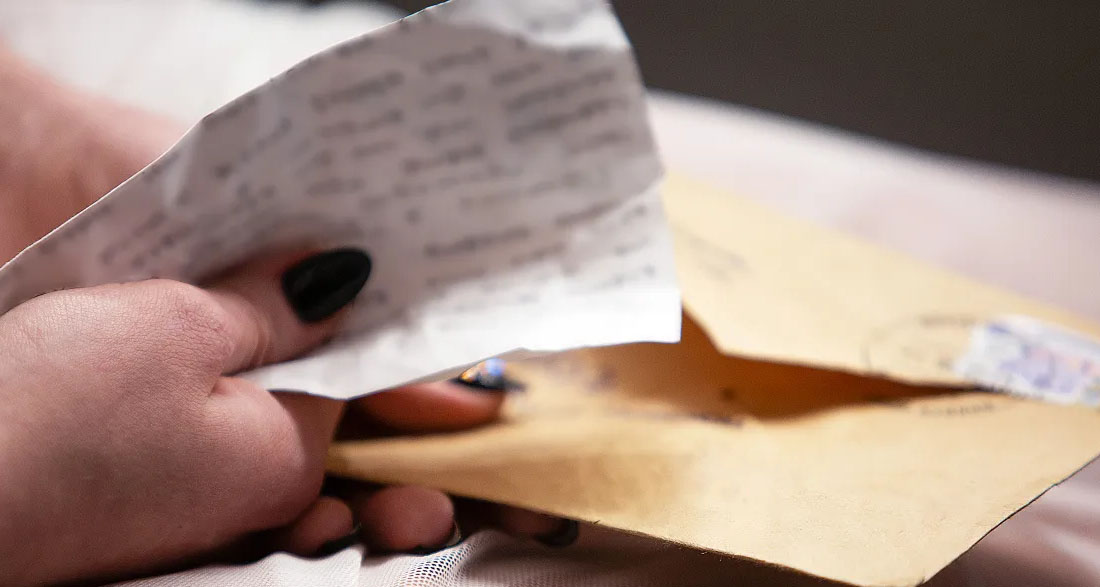
On the desk lay a sealed envelope.
My name written in her elegant handwriting.
My hands trembled as I opened it.
“Dear Anna,
If you are reading this, then my time has passed…”
She wrote about her children’s growing distance. Their hunger for money.
She admitted her failures.
Her coldness.
Her regret.
And then she wrote about me.
“You were quiet, excluded, yet resilient. I admired you for it… Leaving you this house is not about money. It is about giving you something I denied you when you were younger: a place where you belong.”
I broke.
The sobs came from somewhere deep inside — from the ten-year-old girl who had sat silently at the dinner table.
She had seen me.
Too late.
But she had seen me.
Her children didn’t accept it.
Lisa ranted on Facebook. “She manipulated our mother!”
Emily spread whispers. “She preyed on her.”
Jonathan left angry voicemails. “We’ll fight this until it’s overturned!”
But the will was airtight.
The house was legally mine.
Late at night, I stood by the lake behind the mansion, moonlight shimmering on the water.
“A place where you belong,” I whispered.
And for the first time in my life…
I believed it.
The weeks that followed were loud with accusations.
Emails from Lisa filled my inbox. “Give us what’s rightfully ours!”
Jonathan even pounded on the gates one evening, shouting until security escorted him away.
But every night, I returned to Helen’s letter.
“You belong.”
Three words I had needed since I was ten.
I didn’t flaunt the mansion. I didn’t change who I was.
Instead, I turned one room into a library. Shelves lined with books I once could only borrow.
I cooked dinners for friends. Laughter filled halls that had once known silence.
Slowly, the house felt warmer.
Alive.
Eventually, her children stopped fighting.
The will stood firm.
Sometimes, I sit by the lake and think of my father. He had once trusted Helen to care for me.
She admitted she failed him.
Failed me.
But in the end, she tried to make it right.
The mansion may be worth millions.
But that isn’t the true inheritance.
The real gift was acknowledgment.
Regret.
Belonging.
One evening, as I folded the letter carefully and placed it back in the drawer, my husband appeared in the doorway.
“You still read it every night,” he said softly.
I nodded, tracing Helen’s handwriting with my fingers.
“Because every time I do,” I whispered, “I believe her words a little more.”