

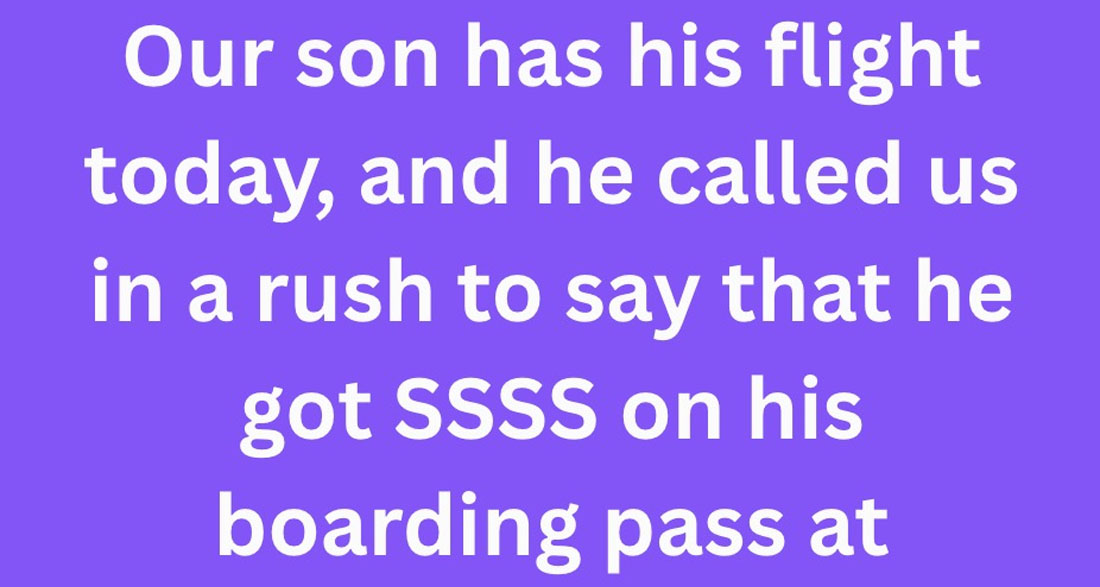
If you’ve ever glanced at your boarding pass and spotted the letters “SSSS”, you might have felt a twinge of worry or confusion. Those four letters stand for “Secondary Security Screening Selection.”
It sounds serious—maybe even scary—but in reality, it simply means you’ve been chosen for an extra security check before boarding your flight. It’s part of the U.S. Transportation Security Administration’s Secure Flight program, designed to make air travel safer by identifying travelers who might need closer inspection.
Here’s the thing: being selected for SSSS doesn’t mean you’ve done anything wrong. Most of the time, it’s completely random. The unpredictability keeps the system effective—no one can guess exactly how airport security works or “beat” it. But there are other reasons you might see SSSS on your pass.
Maybe your passenger information wasn’t complete, your name is similar to someone on a watchlist, you booked a last-minute ticket, or your international travel patterns raise a flag. For most travelers, it’s just a one-time hassle, not a permanent label.
When those letters appear, the first thing you’ll notice is that you can’t check in online or use a self-service kiosk. You’ll need to go to the airline’s check-in counter and talk to an agent.
They’ll verify your documents, check your reservation, and print your boarding pass manually. “It can feel strange if you’re used to breezing through with a mobile pass,” one frequent traveler said, “but it’s really just the start of a more detailed process.”
At the security checkpoint, a TSA officer will direct you to a separate area for secondary screening.
Now the “extra” part begins. Your carry-on bags will likely be opened and hand-searched. TSA agents may wipe your luggage and hands with small cloths to check for traces of explosives. You’ll be asked to remove electronics—laptops, tablets, cameras—and sometimes even turn them on to prove they work.
You’ll also undergo an additional pat-down, even if you’ve already gone through a metal detector or body scanner. Officers might check your boarding pass and ID again.
The whole process is careful, step-by-step, and can take 15 to 45 minutes, depending on the airport, staffing, and how many travelers are being screened.
It can feel awkward when others breeze past while your bags are being thoroughly inspected. But remember: TSA officers are just doing their job. Staying calm, polite, and cooperative is the key. Many officers explain each step as they go. “If you stay relaxed, it usually goes smoothly,” a seasoned traveler explained.
SSSS can happen more than once, especially if you travel to certain countries often or follow patterns that the system flags. For example, booking a one-way international ticket with cash or flying to higher-risk destinations might increase your chances.
Even then, it’s rarely permanent. Once TSA verifies your identity and your travel behavior becomes routine, those letters usually disappear.
For travelers frustrated by repeated SSSS flags, there’s a solution: the DHS TRIP (Traveler Redress Inquiry Program). If you think you’ve been unfairly flagged, you can file a request.
The Department of Homeland Security reviews your case, and if you were mistakenly associated with someone on a watchlist, they can correct it. “It’s not instant, but it’s a legitimate way to make sure your travel records are accurate,” one DHS official explained.
For most people, SSSS is just a small bump in an otherwise normal journey. The best preparation includes arriving early—an extra hour helps—keeping travel documents handy, ensuring electronics are charged, wearing easy-to-remove clothing, and packing carry-ons neatly.
Mentally, it helps to remember that SSSS isn’t personal.
The procedure may feel invasive, but it’s about safety. TSA agents aren’t trying to embarrass you—they’re following a process designed to protect everyone. Many travelers even find silver linings. Secondary screenings happen in quieter areas, and the officers assigned are often polite and professional.
Over the years, travelers have shared funny or frustrating “SSSS stories” online—turning on cameras, shaking out shoes, or unpacking half their bags only to have it all repacked minutes later. Some joke, “Getting SSSS makes me feel like a secret agent for a day!” While humorous, these stories highlight a truth: SSSS isn’t punishment or accusation; it’s an extra layer of security.
Even though SSSS is a U.S. system, other countries have similar screenings, especially for flights to and from the U.S. Hand inspections, travel questions, and electronic checks often mirror the SSSS process. It’s all about maintaining consistent safety.
The origins of SSSS go back to post-9/11 aviation security reforms. Secure Flight compares passenger info to government watchlists before boarding passes are issued. By flagging potential concerns early, TSA can focus on fewer travelers, instead of searching everyone extensively.
When you book a flight, your name, birth date, and gender are submitted to TSA. That info is checked against various lists. If something doesn’t match—or matches too closely with someone flagged—you might get SSSS. Random selections are also built into the system. The “secondary screening” label is TSA saying, “Let’s take an extra look here.”
Because this system runs quietly, most travelers never know why they’re flagged. You might fly dozens of times without incident, then suddenly see SSSS.
Sometimes, patterns appear: using a new airline, booking with a different card, traveling internationally with multiple stops. Other times, it’s completely random. That unpredictability is intentional—it keeps travelers and potential threats guessing.
If you’re running late and see SSSS, don’t panic. Politely explain to airline staff and TSA officers.
They’re used to helping time-sensitive passengers and will usually expedite the process while still following security steps. Staying calm and organized—knowing where your electronics, liquids, and documents are—makes everything faster and less stressful.
In the end, SSSS is a brief detour, not a disaster. It’s a reminder that air travel involves complex systems working behind the scenes to balance convenience with safety. For every traveler spending an extra half hour in screening, thousands move smoothly because of these checks.
Next time you see SSSS, take a deep breath, stay cooperative, and remember: almost everyone experiences this at least once, and most continue on their journey without further issues. It’s not personal—it’s just part of a massive system keeping millions of flights safe every year.
Those four letters might slow you down for a bit, but they also represent a system quietly working to ensure you, and everyone else, arrive safely at your destination. And that, in the grand scheme, is worth a few extra minutes at the airport.