

When my grandma got sick, my whole life changed overnight.
I was 28, still figuring things out, still thinking I had time for everything. Then the doctors said the word “cancer,” and suddenly my days belonged to hospital waiting rooms and pharmacy lines.
I drove her to chemo.
I sorted her pills into those little plastic boxes with the days of the week on top.
I filled her fridge with soup, yogurt, and ginger ale.
On the nights when she felt too weak to be alone, I slept on her couch, listening to her breathing in the dark.
Her dog, Scout, never left her side.
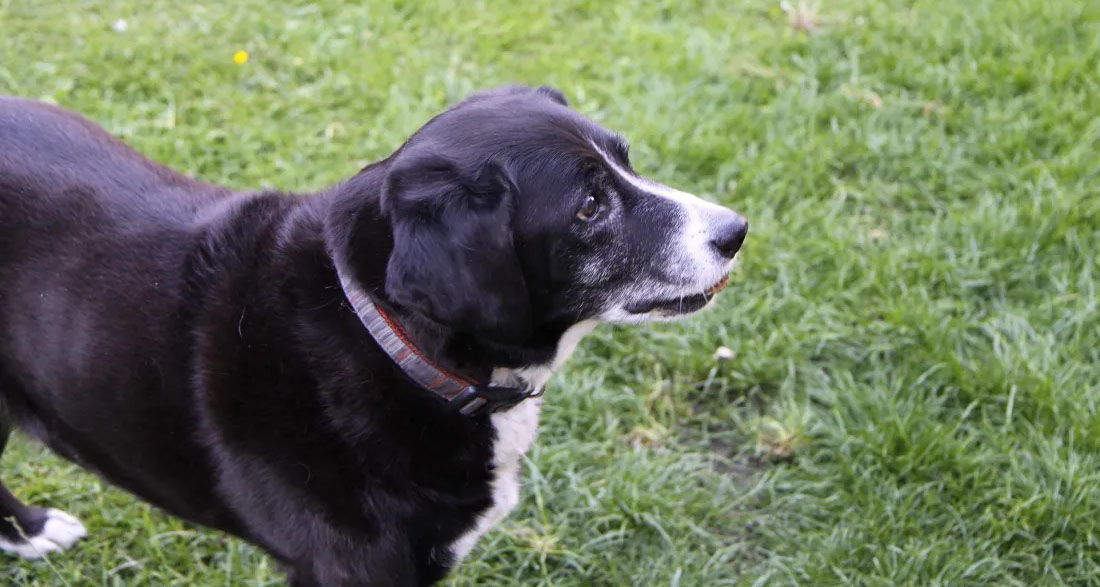
He was old and stubborn, with a gray muzzle and a wheezy sigh that always sounded like he was personally offended by life. He followed her everywhere, like a tired shadow. If she shifted in her chair, he lifted his head. If she coughed, he was instantly alert.
When she got too tired to walk him, I did.
When her hands shook, I steadied them.
My sisters? They stayed “busy.”
Maris would send a text: “Thinking of you.”
Kaia reacted to updates with heart emojis, like that counted as support.
Every couple of weeks, they would show up with grocery-store flowers. They’d stand close to Grandma’s recliner, take a sad selfie, and then leave before the kettle even finished boiling.
One night after chemo, Grandma June’s hands shook so badly she spilled tea all over the blanket in her lap. The cup clattered against the saucer.
“Oh, shoot,” she muttered.
“It’s okay,” I said quickly, grabbing paper towels. I tried to keep my hands steady, trying not to look scared.
Scout pressed his head into her lap and stared at me like I was responsible for fixing the entire world.
Later that night, when the house was quiet except for the ticking clock in the kitchen, Grandma squeezed my hand.
“Promise me one thing,” she said.
“Grandma, don’t,” I whispered. I already knew where this was going.
Her eyes held mine. Calm. Sharp. Clear.
“Blythe,” she said, “they’re going to come running when I’m gone.”
My chest tightened. “Please don’t talk like that.”
“Promise me,” she insisted gently. “If it turns into a circus… you take Scout.”
I blinked. “Why would it turn into a circus?”
“Because they’ll smell money,” she said flatly. “And they’ll forget I was a person.”
Scout’s ears twitched when he heard his name.
The house felt too quiet, too fragile.
“I promise,” I said finally. “I’ll take him.”
She nodded. Her face softened. “Good, softheart.”
That nickname used to make me roll my eyes when I was a kid.
That night, it made my chest ache.
Three months later, she was gone.
The house felt wrong without her humming. Without her little cough-laugh when Scout begged for scraps.
At the funeral, Maris cried loudly, her face pressed into a tissue like she was on stage.
“Oh Grandma,” she sobbed dramatically.
Kaia clung to her arm, mascara smudged in a way that looked almost planned. She kept glancing around the room, like she was checking who was watching.
People came up to me and said, “You did so much for her.”
I nodded like a ghost.
Two days later, we sat in an attorney’s office that smelled like lemon cleaner and old paper.
Maris wore a fitted black dress and lipstick that didn’t quite match grief.
Kaia’s mascara was still smudged, just enough.
The attorney cleared his throat.
Maris leaned forward before he even finished his first sentence.
“So… the house?” she asked, bright-eyed.
Kaia jumped in. “Is it split three ways?”
The attorney adjusted his glasses. “June left the house jointly to Maris and Kaia.”
Maris’s smile flashed like a camera bulb.
Kaia’s shoulders lifted like she’d just won a prize.
Then the attorney turned to me.
“Blythe,” he said gently, “June left you Scout.”
There was a second of silence.
Kaia laughed. “The dog?”
Maris smirked. “Wow. Congrats. You tended to Grandma for nothing!”
My throat tightened, but I refused to give them a reaction.
I stood up. “So I can take him today?”
The attorney nodded. “Yes.”
Kaia tilted her head. “Guess you got your reward.”
I didn’t answer. I walked out without looking back.
Scout was waiting in my car on a blanket that still smelled like Grandma. When I opened the door, he looked up and thumped his tail once.
“Come on, buddy,” I whispered. “We’re going home.”
My apartment was tiny and too quiet.
Scout sniffed every corner, then circled twice and dropped down with a heavy sigh, like he was clocking in for a shift.
I sat on the floor beside him and buried my face in his fur.
“I’m sorry,” I whispered. “I’m so sorry.”
He nudged my hand like, yes, okay, but please stop crying.
That night, he wouldn’t settle. He kept pawing at his collar and staring at me like I was missing something obvious.
“You need to go out?” I asked.
He didn’t move toward the door.
He pawed at the collar again.
I leaned closer and noticed something tiny stuck to his tag.
A small sticker.
A QR code.
My stomach flipped.
At two in the morning, with my phone shaking in my hand, I scanned it.
A page opened.
For the one who chose Scout. Password required.
My mouth went dry.
I typed everything I could think of.
June.
Grandma.
Scout.
Love.
Nothing worked.
Scout rested his chin on my knee, watching me calmly, like he was waiting for me to catch up.
My eyes burned from staring at the screen.
Then I typed the name she used to call me.
softheart.
The page unlocked.
A video loaded.
Grandma’s face filled the screen—healthy, bright, alive.
I gasped so hard it hurt.
“Hi, honey,” she said, smiling. “If you’re seeing this, you did what I asked.”
I pressed my hand to my mouth. “Oh my God…”
“Listen carefully,” she continued. “Scout is not just a dog. Scout is the test.”
A shaky laugh escaped me, half sob, half disbelief.
“If you bargained—if you asked, ‘What else?’—then you weren’t the one I could trust,” she said. “But you didn’t.”
Her eyes softened.
“You took him. You chose love. So you get the truth.”
My chest squeezed. “What truth?”
“Tomorrow,” she said, “take Scout to Dr. Patel’s clinic. Ask for a file under Scout’s name.”
“Under his name?” I whispered.
“They’ll know,” she said. “Inside is an envelope and a key.”
Her expression turned firm.
“Do not confront your sisters yet. Do not warn them. Let them show you who they are when they think they’ve won.”
The video ended.
The apartment felt colder.
Scout licked my fingers once, slow and certain.
“Okay,” I whispered. “We’ll do it.”
The next morning, I drove across town with Scout in the passenger seat.
The clinic smelled like antiseptic and wet fur.
Scout’s tail thumped once when we walked in.
The receptionist looked up. Her face changed when she saw him.
“Scout,” she said softly.
“I’m Blythe,” I said, swallowing. “June’s granddaughter. I was told there’s a file under Scout’s name.”
She didn’t ask questions. She just disappeared into the back and came back with a manila folder.
“Take care of him,” she said quietly.
“I will,” I replied.
In the parking lot, I opened it with shaking hands.
Inside was a sealed envelope with my name written in Grandma’s careful handwriting: Blythe only.
A small key was taped to a note.
Storage Unit 118. Bring someone.
My heart pounded so loud I could hear it.
I called my friend Tessa.
She answered cheerfully, “Hey!”
“I need you,” I said. “Like, now.”
Her tone changed instantly. “I’m coming. Where are you?”
Storage Unit 118 opened with a long squeal.
Inside were neatly stacked bins, photo albums, and a small lockbox that looked like it belonged in a bank vault.
Tessa stared. “Your grandma planned.”
“She always did,” I said quietly.
We hauled two bins and the lockbox to my car.
Back at my apartment, I opened the sealed envelope first.
Inside were bank statements, a handwritten ledger, and a typed document titled Trust Contingency.
I read it once.
Then twice.
Then a third time.
If Maris or Kaia tried to sell the house, borrow against it, or remove property before the estate settled, the house would transfer into a charitable trust.
They would lose it.
Tessa exhaled slowly. “That’s savage.”
I flipped through the ledger.
Grandma had written down every single “loan” she ever gave them.
Emergency rent.
Car payment.
“Just until payday. Promise to pay back.”
None of it had been repaid.
There was a thumb drive too.
I plugged it in.
Voicemails played.
Maris: “Grandma, it’s just practical. Put us on the account.”
Kaia: “You’re sick. Let us handle it.”
My hands curled into fists.
They hadn’t been too busy.
They’d been too greedy.
A week after the will reading, I went back to the house to pick up a few sentimental things.
I brought Scout. I didn’t trust my sisters not to “lose” him on purpose.
When I opened the door, loud music blasted through the living room. Not Grandma’s old country station. Something thumpy and careless.
Boxes lined the hallway.
Trash bags sat open like hungry mouths.
Maris and Kaia were inside like they had already moved in.
Kaia held up Grandma’s casserole dish with two fingers. “Why did she keep this junk?”
Maris pointed her phone at a stack of vintage Pyrex. “That’s worth money. Don’t toss that.”
My throat tightened.
“What are you doing?” I asked.
Kaia turned, eyes bright. “Sorting. This place is a gold mine.”
Maris didn’t even greet me. “Take whatever little knickknacks you want. Just don’t touch anything valuable.”
Scout growled low. I had never heard that sound from him before.
Kaia rolled her eyes. “Oh my God. Your little dog is still here?”
“He’s not little,” I said. “And he’s not yours.”
Maris smirked. “Relax. We’re not stealing your prize.”
Kaia laughed sharply. “Seriously, Blythe. What are you doing here, loser? Go walk your little dog.”
The word loser hit hard.
Because it proved Grandma right.
To them, I was labor. A tool. Something useful but not valuable.
I didn’t yell.
I didn’t cry.
I walked to the dining table and placed my folder down beside their messy piles.
Maris frowned. “What is that?”
“Grandma’s real plan,” I said.
Kaia snorted. “The will was read. We got the house. You got the dog. End of story.”
I slid the Trust Contingency toward them.
Maris read the first lines and went completely still.
Kaia leaned over. “What is this?”
“It says,” I replied evenly, “if either of you sells the house, borrows against it, or removes property before the estate settles, the house transfers into a charitable trust.”
Kaia scoffed. “She can’t do that.”
“She already did,” I said. “It’s filed.”
Maris’s fingers trembled. “This is fake.”
I laid down the bank statements and the ledger.
“Then explain the withdrawals during chemo,” I said quietly. “Explain why the amounts match the ‘loans’ Grandma wrote down.”
Kaia’s face flushed. “You went through her stuff?”
I looked around at the ripped-open drawers and trash bags. “You’re going through her stuff right now.”
Maris snapped, “You think you’re some hero because you played nurse?”
My voice shook, but I held it steady. “I didn’t play anything. I was here. Every day.”
Kaia’s voice cracked, panic rising. “So you’re blackmailing us?”
“No,” I said. “Grandma set boundaries. I’m enforcing them.”
Scout leaned into my leg, warm and solid.
I looked down at him, then back at my sisters.
“She didn’t give me Scout as a consolation prize,” I said. “She gave me Scout because she knew whoever loved him enough to take him without asking ‘what else’ was the person she could trust.”
Maris stared at him like he had turned into a live grenade.
“This is insane,” she whispered.
“It is,” I agreed. “But it’s real.”
I gestured at the boxes. “Put it back. Stop turning her life into a garage sale.”
For a long moment, no one spoke.
Finally, Maris swallowed. “Fine. What do you want?”
I looked around the room where Grandma used to roll out pie dough and call me softheart.
“I want you to stop,” I said. “That’s it.”
I clipped Scout’s leash to his collar.
He pressed his shoulder against my shin like he was bracing me.
I walked out without slamming the door.
Outside, the air felt cold and clean.
In the car, my hands shook on the steering wheel.
“You did good,” I whispered.
Scout huffed softly, like it was obvious.
The house grew smaller in the rearview mirror.
It wasn’t a prize.
It wasn’t a win.
It was proof that Grandma had seen everything.
And even at the end, she protected what mattered most.